Preparing for pregnancy is one of the most meaningful decisions a woman makes. The moment you start thinking about the future and the little life you hope to carry, questions naturally follow. Many women begin searching for ways to prepare their bodies for pregnancy long before they start trying. This preparation is about more than taking supplements or changing a diet; it is about giving your future pregnancy the healthiest possible foundation.
These early months matter. They help you understand your body better, correct small issues before they become bigger concerns, and build habits that support your hormones, energy levels, and overall health. Whether you are ready to begin trying soon or simply planning ahead, the right knowledge will guide your journey with clarity and confidence.
Why Preparing Your Body Matters
When a woman thinks about pregnancy, she often focuses on the months after conception. But your health before pregnancy is just as important as your health during it. Hormone balance, nutrient reserves, sleep, stress, and lifestyle choices all play a role in fertility and early fetal development. A strong foundation lowers risks, improves energy, and increases the likelihood of a smooth pregnancy experience.
Many women are surprised to learn that eggs begin maturing several months before ovulation. This means your choices today can affect the quality of your egg in the future. This is why preparing early is so valuable.
Start with a Preconception Checkup
One of the most important steps is scheduling a preconception checkup. This is a detailed review of your health that identifies anything that may affect fertility or pregnancy. It is not only for women who have concerns. Even completely healthy women benefit from it because it provides clarity and reassurance before you begin trying.
Your doctor may discuss:
- Your menstrual cycle and ovulation patterns
- Any symptoms of hormonal imbalance
- Thyroid function
- Vitamin and mineral levels
- Your vaccination history
- Family health history
- Past medical or surgical history
This visit is also the time to speak openly about any discomfort or irregularities you notice, even if they seem unimportant. Simple things like fatigue, irregular cycles, acne, hair fall, or weight fluctuations can point to underlying issues that may influence fertility.
When these concerns are addressed early, the body responds better, cycles regulate more smoothly, and chances of conception naturally improve.
Healthy Pregnancy Tips to Begin Early
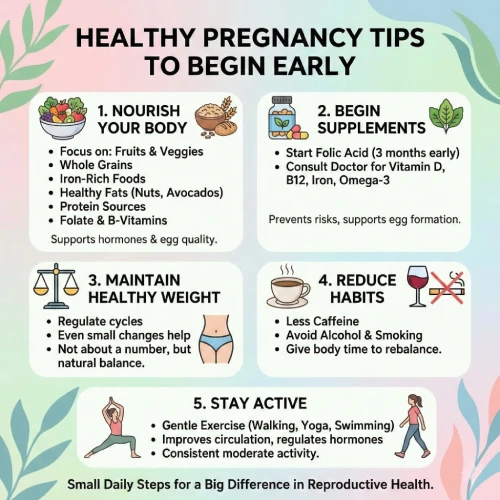
Once you decide to prepare for pregnancy, small daily steps make a big difference. These habits support hormonal balance, energy, emotional well-being, and overall reproductive health.
1. Nourish Your Body with the Right Foods
Food plays a central role in fertility. A well-planned fertility diet supports hormone production, egg quality, and blood flow to reproductive organs. It is not about strict rules or complicated plans; it is simply about choosing nutrient-rich foods consistently.
Focus on:
- Fresh fruits and vegetables
- Whole grains
- Iron-rich foods like spinach, legumes, and lean meats
- Healthy fats like nuts, avocados, and olive oil
- Protein from plant or animal sources
- Foods rich in folate and B-vitamins
Healthy fats help produce reproductive hormones. Iron supports ovulation. Antioxidants protect egg cells from damage. When these nutrients are part of your daily routine, your body feels energised and balanced.
2. Begin Folic Acid and Key Supplements
Most doctors recommend starting folic acid at least three months before trying to conceive. It helps prevent developmental risks and supports healthy egg formation. Depending on your blood levels, your doctor may also suggest Vitamin D, B12, iron, or omega-3 supplements.
Do not begin supplements on your own. Your needs are unique, and your preconception checkup helps identify what your body actually requires.
3. Maintain a Healthy Weight
Your reproductive hormones are closely linked to body fat levels. Being significantly underweight or overweight can disrupt ovulation. Even a small change in weight, when medically recommended, can help regulate cycles and improve chances of conception.
The goal is not to chase a number on the scale; it is to help your body return to its natural balance.
4. Reduce Caffeine, Alcohol, and Smoking
These are simple habits with big impacts. Excess caffeine affects sleep and hormone levels. Alcohol influences egg quality and early fetal development. Smoking affects ovulation and increases fertility challenges.
Cutting down or stopping these habits early gives your body time to naturally rebalance before you start trying.
5. Stay Active with Gentle Exercise
Exercise improves blood circulation, regulates hormones, reduces stress, and boosts mood. You do not need intense workouts; consistent moderate activity is more beneficial.
Activities like walking, yoga, swimming, pilates, or light strength training are ideal when preparing for pregnancy.
How to Increase Fertility Naturally
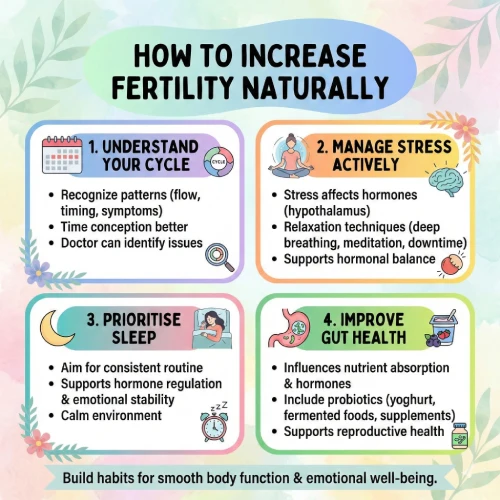
Natural fertility support is not about quick fixes. It is about building habits that help your body function smoothly and predictably. Simple lifestyle adjustments can positively influence ovulation, hormones, and emotional well-being.
1. Understand Your Menstrual Cycle
Your cycle offers clues about your health. When you pay attention to changes in flow, timing, and symptoms, you begin to recognise patterns. This awareness helps you time conception better once you begin trying.
Tracking your cycle for a few months also helps your doctor identify whether everything is working as it should.
2. Manage Stress Actively
Stress affects the hypothalamus, which controls reproductive hormones. Many women experience irregular cycles or delayed ovulation during high-stress periods.
Incorporating relaxation techniques such as deep breathing, light stretching, meditation, or simply giving yourself regular downtime can support hormonal balance. Even 15 minutes a day makes a difference.
3. Prioritise Sleep
Good sleep supports hormone regulation, metabolism, immunity, and emotional stability. Aim for a consistent sleep routine and ensure your bedroom environment is calm and comfortable.
4. Improve Gut Health
Gut health influences nutrient absorption, inflammation, and hormone metabolism. Including probiotics through yoghurt, fermented foods, or supplements may support reproductive health.
The Role of Your Partner’s Health
Preparing for pregnancy is a shared journey. Many couples focus only on the woman’s health, but sperm quality also significantly influences conception.
Healthy dietary choices, reducing alcohol and smoking, managing stress, and maintaining regular exercise support sperm count and mobility. If your partner has lifestyle factors like late work hours, stress, or irregular sleep, addressing them early can help both of you.
The Emotional Side of Preparing for Pregnancy
Preparing your body is important, but preparing your mind is equally meaningful. Pregnancy involves physical and emotional transitions, and having clarity, support, and realistic expectations makes the experience smoother.
Take time to talk to your partner about:
- The timeline you both feel comfortable with
- Your lifestyle and routines
- Your fertility concerns or questions
- How you both want to prepare mentally and emotionally
When you feel supported and informed, the process feels less stressful and more empowering.
How Long Should You Prepare Before Trying?
There is no universal timeline. Some women begin preparation six months before trying. Others begin earlier, especially if they have ongoing health concerns.
Most doctors recommend allowing at least three months for preconception preparation. This is the approximate time your egg needs to mature, and it allows your body to benefit from improved nutrition, supplements, and lifestyle changes.
If you have irregular cycles, PCOS, thyroid concerns, previous pregnancy complications, or chronic conditions, beginning earlier is helpful.
What Not to Do While Preparing for Pregnancy
Here are a few things women often overlook:
- Do not self-prescribe supplements “just in case.”
- Do not start extreme diets or fasting routines.
- Do not overexercise to lose weight quickly.
- Do not compare your journey to others.
- Do not ignore symptoms like excessive hair fall, severe cramps, or cycle irregularity.
These signs may point to internal imbalances that should be addressed before conception.
Conclusion
Preparing your body for pregnancy is one of the most important gifts you can give yourself and your future baby. If you would like personalised guidance, you can visit Prime Hospital, Dubai, or book a consultation with Dr Neha for a complete preconception review. Begin your journey with clarity, confidence, and support.