When couples begin exploring fertility treatments, one of the first questions they ask is how to choose between IUI and IVF. Understanding IUI vs IVF helps you make a clear, confident decision that matches your health needs, emotional comfort, and long-term family goals. Both treatments offer real possibilities, but they work in different ways and support different types of fertility challenges.
Fertility care can feel overwhelming at first. There are tests, new terms, treatment pathways, and success rates to consider. If you are unsure where to begin, you are not alone. Many individuals and couples feel the same way when they take their first step into assisted conception. With the right guidance and clear information, you can understand the options available and decide which pathway aligns best with your journey.
Understanding the Basics of IUI and IVF
Before comparing treatments, it helps to know what each one involves. Both IUI and IVF aim to improve your chances of conception, but the approach and level of medical intervention differ.
What Is IUI?
Intrauterine insemination (IUI) is a procedure where prepared sperm is placed directly inside the uterus during the fertile window. This increases the number of sperm that reach the egg at the right time. The goal is to support natural fertilisation by improving timing and proximity.
IUI is often recommended for:
• Unexplained infertility
• Mild male-factor infertility
• Irregular ovulation
• Cervical problems
• Couples who prefer a less invasive first step
The procedure is quick, relatively simple, and requires minimal recovery time.
What Is IVF?
In vitro fertilisation (IVF) is a more advanced fertility treatment. It involves stimulating the ovaries to produce multiple eggs, retrieving those eggs, fertilising them outside the body in a laboratory, and transferring the resulting embryo back into the uterus.
IVF is commonly recommended for:
• Blocked or damaged fallopian tubes
• Low ovarian reserve
• Severe male-factor infertility
• Endometriosis
• Failed IUI attempts
• Older maternal age
IVF provides more control and higher success rates, especially for couples with complex fertility concerns.
Comparing IUI vs IVF: What You Need to Know
Most couples look at IUI and IVF side by side to understand which pathway feels right. These are the key areas where they differ.
Level of Intervention
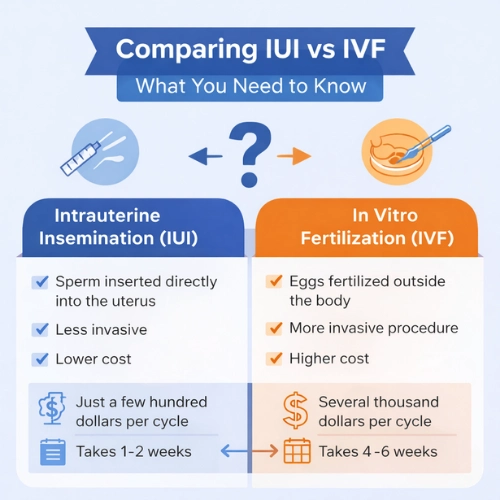
IUI is less invasive, uses natural ovulation or mild stimulation, and supports the body’s natural process.
IVF requires several steps, including stimulation, monitoring, egg retrieval, laboratory fertilisation, and embryo transfer. It offers more insight into egg health, sperm function, and embryo development.
Success Rates
Many couples begin by researching the IUI success rate to decide whether it is the right first option.
On average:
• IUI success rates range between 10–20 percent per cycle, depending on age and underlying health.
• IVF success rates are significantly higher, often between 40–60 percent, especially for younger women.
Success rates also depend on egg quality, sperm quality, reproductive health, and overall lifestyle.
Time to Pregnancy
IUI may take several cycles to achieve pregnancy. Some couples conceive within the first two to three attempts, while others may need more time.
IVF often provides faster results due to a more controlled and targeted approach. For women over 35 or couples facing known fertility issues, IVF may shorten the overall time to pregnancy.
Cost Considerations
Many couples compare the IVF cost with IUI to evaluate financial planning.
• IUI is more affordable per cycle, which is why many couples start here.
• IVF is more expensive due to medications, laboratory procedures, advanced technology, and embryo culture.
However, if multiple IUIs fail, total costs may end up being similar to a single IVF cycle. Understanding your specific fertility diagnosis helps you make a wise financial decision.
Emotional Considerations
IUI is often less emotionally intense because it is simple, quick, and involves fewer steps.
IVF can bring excitement and hope, but it may also feel more demanding due to injections, monitoring, and waiting for embryo development. Emotional support from your doctor, partner, or support system makes a meaningful difference throughout the process.
Who Should Choose IUI?
IUI is often considered the best first step for couples who meet certain criteria. It works well when the basic components of fertility—egg health, sperm quality, fallopian tube function, and ovulation—are mostly normal.
IUI may be suitable if:
• You are younger and have good ovarian reserve
• Your fallopian tubes are open
• Sperm count and motility are within functional range
• You have mild fertility issues
• You prefer a less invasive, lower-cost option initially
IUI also works well when timing intercourse is difficult due to schedules, sexual discomfort, or stress. The controlled timing of insemination increases the chances of fertilisation.
Who Should Choose IVF?
IVF may be a better option for couples or individuals whose fertility concerns require a more advanced treatment. It offers insight into egg quality, embryo development, and overall reproductive potential.
IVF may be suitable if:
• You have tried IUI without success
• There are blocked or damaged fallopian tubes
• There is moderate to severe male-factor infertility
• You have endometriosis
• You are over 35 and want higher success rates
• You have low ovarian reserve
• You want genetic testing (PGT) for embryos
IVF also allows embryo freezing, giving you future options for family planning.
Which Is Better: IUI or IVF?
Many couples directly ask, which is better, IUI or IVF? The answer depends entirely on your fertility profile and personal goals. One treatment is not universally superior to the other; they serve different purposes.
IUI may be better if you want a simpler, more natural approach that enhances the body’s existing process. IVF may be better if you want higher success rates, more medical control, or need treatment for a specific diagnosis.
Your doctor will consider your age, reproductive history, hormone levels, medical conditions, and emotional readiness before recommending the best fertility treatment for you.
How to Decide Between IUI and IVF
If you are uncertain which path to choose, consider these questions:
• What are your fertility test results?
• What is your age and ovarian reserve?
• Do you want the highest chance of success quickly?
• How do you feel emotionally about each process?
• Are your fallopian tubes healthy?
• Is sperm quality a major concern?
• Are you planning for one baby or possibly more?
• What is your timeline for conception?
A personalised evaluation offers a clear picture. Every couple has a unique journey, and the best choice is the one that supports your timeline, diagnosis, and comfort.
The Role of Lifestyle and Timing
Lifestyle, emotional well-being, and timing play essential roles in both IUI and IVF outcomes. Preparing your body through good nutrition, sleep, movement, and stress management can improve success rates for both treatments.
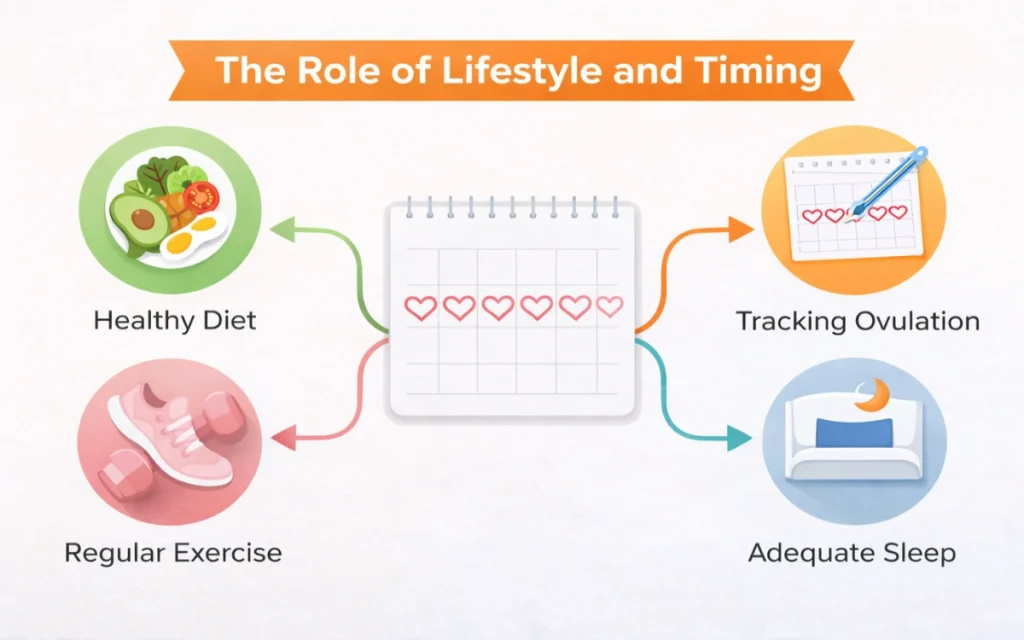
Nutrients such as folate, omega-3 fatty acids, antioxidants, and iron support reproductive health. Regular exercise and stress-reduction techniques such as yoga and mindfulness promote hormonal balance and emotional resilience.
When to Move from IUI to IVF
Many couples begin with IUI but wonder when it is appropriate to move to IVF. Most specialists recommend three to four IUI cycles before considering IVF, especially if you are under 35 and have no major fertility concerns.
You may consider moving to IVF earlier if:
• You are over 35
• Your ovarian reserve is low
• You have endometriosis
• There are sperm abnormalities
• You want faster results
• You need genetic testing
Transitioning at the right time prevents unnecessary delays and protects your long-term reproductive health.
Understanding Realistic Expectations
Fertility treatment is a journey that requires patience, clarity, and emotional strength. Whether you choose IUI or IVF, it helps to set realistic expectations. Every cycle offers new insights into your reproductive health, and every result—positive or negative—gives your doctor information to guide your next steps.
You are not alone in this journey, and the right support system can make each stage feel more manageable.
Conclusion
Choosing between IUI and IVF is a deeply personal decision that depends entirely on your unique health profile, timeline, and family goals. While IUI offers a simpler, less invasive starting point, IVF provides an advanced, highly controlled pathway for overcoming more complex fertility challenges. Both options offer real hope, and understanding your specific needs is the first step toward a successful pregnancy.
You do not have to navigate these choices alone, and getting a personalized medical evaluation will give you the clarity you need. To discover which treatment aligns best with your journey, book a consultation with Dr. Neha at Prime Hospital, Dubai, and take your next step toward parenthood with confidence and professional support.