Many women today are searching for clarity about egg freezing as they plan their future. Questions about egg freezing, fertility preservation, and the best age to freeze eggs often arise when balancing personal goals, career decisions, and the natural timeline of fertility. As more women delay marriage or motherhood, the idea of protecting future fertility has become a thoughtful and empowering choice.
If you are considering whether it might be the right step for you, understanding the process, the benefits, and what to expect can help you make an informed decision. Fertility preservation is no longer a rare concept. It is a practical option that provides women with flexibility and peace of mind, especially during a phase of life when priorities and circumstances may be evolving.
Why Fertility Preservation Matters Today
The average age of marriage and motherhood has steadily increased over the years. Women are prioritising education, career growth, financial stability, and personal exploration before settling down. At the same time, fertility naturally declines with age, particularly after the early 30s. This gap between biological reality and modern lifestyle choices has made fertility preservation a meaningful solution.
Egg freezing allows you to protect your younger, healthier eggs for future use. It gives you time and freedom without the pressure of a ticking clock. Even if you are not ready to start a family now, you are keeping the door open for the future.
The Science Behind Egg Freezing
Egg freezing, medically known as oocyte cryopreservation, involves retrieving your eggs, freezing them at sub-zero temperatures, and storing them until you are ready to use them. The advanced technology used today is known as vitrification. This flash-freezing method prevents ice crystals from forming and keeps the eggs in excellent condition.
When you decide to conceive later, the eggs are thawed, fertilised with sperm, and transferred as embryos into the uterus. The success rates are closely linked to the age at which the eggs were frozen, which is why many women explore this option during their late 20s or early 30s.
Best Age for Egg Freezing
While you can freeze your eggs at almost any reproductive age, there is strong evidence that the best age for egg freezing is before 35. This is because both the number and quality of eggs decline significantly after this age.
Women in their mid-to-late 20s have the highest egg quality. Women in their early 30s also have very good success outcomes. Freezing eggs in the late 30s is still possible, but you may require more hormone stimulation cycles to retrieve enough good-quality eggs.
The decision ultimately depends on your health, your ovarian reserve, and your long-term plans. If you are unsure, a fertility assessment is often the best first step.
Why Women Choose to Freeze Their Eggs Before Marriage
Many women worry that they must wait for the perfect partner before they can start thinking about future motherhood. Freezing your eggs allows you to move at your own pace. You are not tied to a biological deadline while waiting for the right relationship or marriage.
Choosing to freeze eggs before marriage can bring emotional reassurance. It reduces pressure and allows you to make relationship decisions without feeling rushed. It also protects fertility from age-related decline, which is something no lifestyle change can fully prevent.
Women also choose egg freezing when there is a family history of premature ovarian failure or early menopause. In such cases, egg freezing can be a proactive way of preserving fertility.
When Career Goals Come First
Ambitious career paths often require travel, long working hours, and delayed planning for pregnancy. Egg freezing helps avoid the stress of trying to “fit in” fertility within demanding career timelines.
Women in high-pressure careers, entrepreneurs, frequent travellers, or those pursuing long-term education often choose fertility preservation to safeguard future family planning. It allows you to grow professionally without compromising future biological possibilities.
What Happens During a Preconception or Fertility Check
Before beginning egg freezing, most women undergo a fertility evaluation. This is not the same as a routine preconception checkup but shares some similar tests. It helps assess your ovarian reserve and overall reproductive health.
A typical fertility assessment includes:
• Ultrasound to check ovarian reserve
• AMH (Anti-Müllerian Hormone) test
• Hormone profile
• Assessment of menstrual history
These tests help understand how your ovaries are functioning and predict how many eggs can be retrieved in one cycle.
Step-by-Step: What Egg Freezing Involves
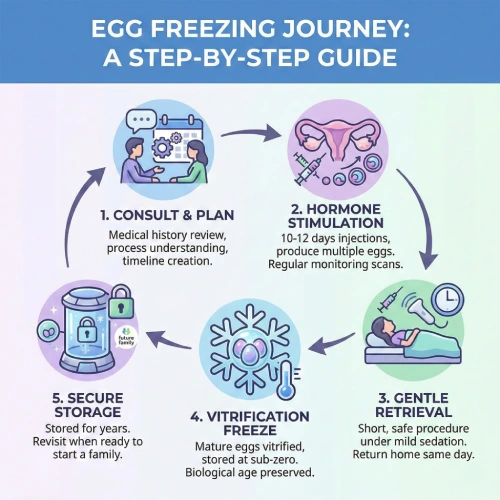
The journey usually lasts around two weeks. Here is a clear outline of what you can expect.
1. Initial Consultation
This visit helps you understand the process, success rates, risks, and costs. Your doctor will review your medical history and plan your treatment timeline.
2. Hormone Stimulation
You will take hormone injections for 10 to 12 days to help your ovaries produce multiple mature eggs instead of the one egg produced each month. You will have regular scans during this period to monitor growth.
3. Egg Retrieval
This is a short and safe procedure done under mild sedation. A needle gently collects the eggs from the ovaries. Most women return home the same day.
4. Freezing the Eggs
The mature eggs are vitrified and stored safely at sub-zero temperatures. These eggs remain biologically your age at the time of freezing.
5. Storage
Your frozen eggs can be stored for several years. Many women freeze eggs and revisit them when they are ready to start a family.
How to Increase Fertility Naturally Before Egg Freezing
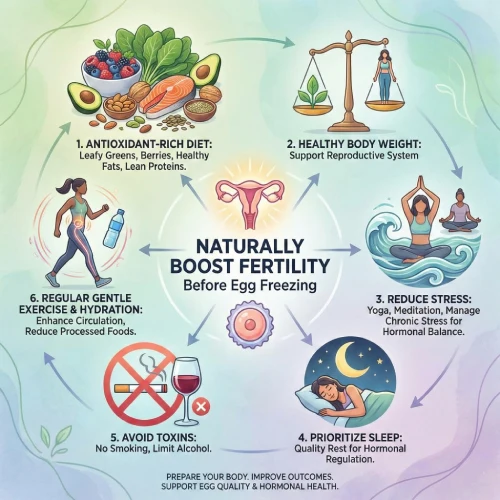
Even though egg freezing is a medical procedure, preparing your body improves the outcome. Making certain lifestyle changes can support egg quality and hormonal health.
Some natural ways to improve fertility include:
• Eating a balanced fertility diet rich in antioxidants
• Maintaining a healthy body weight
• Reducing stress levels
• Sleeping well
• Avoiding smoking and excessive alcohol
A diet rich in leafy greens, whole grains, berries, healthy fats, nuts, seeds, and lean proteins supports your reproductive system. Hydration and reducing processed foods also contribute to better hormonal balance.
Regular movement, such as walking or yoga, enhances circulation to the reproductive organs. Stress management is equally important because chronic stress can affect hormone regulation.
Understanding Egg Freezing Cost
The egg freezing cost varies based on the clinic, the medications required, and the number of cycles needed. The total cost usually includes consultation, investigations, hormone injections, egg retrieval, and storage fees.
Medication costs often form a significant part of the expense because the dosage depends on your ovarian reserve. Some women require more stimulation to retrieve enough eggs. The number of eggs needed also varies based on your age and your future family goals.
While the cost may feel like an investment, many women view it as long-term security for their reproductive future.
Is Egg Freezing Safe?
Egg freezing is considered safe and widely practised across the world. Short-term side effects are usually mild, such as bloating, mood changes, and temporary discomfort from hormone stimulation.
Long-term risks are minimal, and the procedure does not affect your ability to conceive naturally in the future. Most women resume normal activities a day after retrieval.
Emotional Aspects of Fertility Preservation
Choosing egg freezing is not only a medical decision but an emotional one. It can bring relief and peace of mind, but it may also raise questions about the future. Many women feel empowered knowing they have taken a step towards protecting their options.
Support from your doctor and counselling, if needed, can help you navigate these feelings. It is important to remember that egg freezing is not a guarantee of pregnancy, but it significantly improves your chances if you decide to start a family later.
How Long Can Eggs Stay Frozen?
Frozen eggs can remain stored for many years without losing their quality. There have been successful pregnancies from eggs frozen for over a decade. Your eggs stay the age they were at the time of freezing, which is the core benefit of fertility preservation.
Conclusion
Fertility preservation through egg freezing gives you time, flexibility, and peace of mind when planning your future. If you would like personalised guidance or wish to understand whether it is the right step for you, you can visit Dr Neha at Prime Hospital, Dubai. Book a consultation to explore your fertility options with clarity and confidence.