
Tubal ligation is a surgical method of permanent contraception, often considered by women who are certain they do not want future pregnancies. If you are considering tubal ligation in Dubai, it is important to understand how the procedure works, how effective it is, whether it affects your periods or hormones, what happens if you later want to become pregnant, and which UAE medical requirements apply.
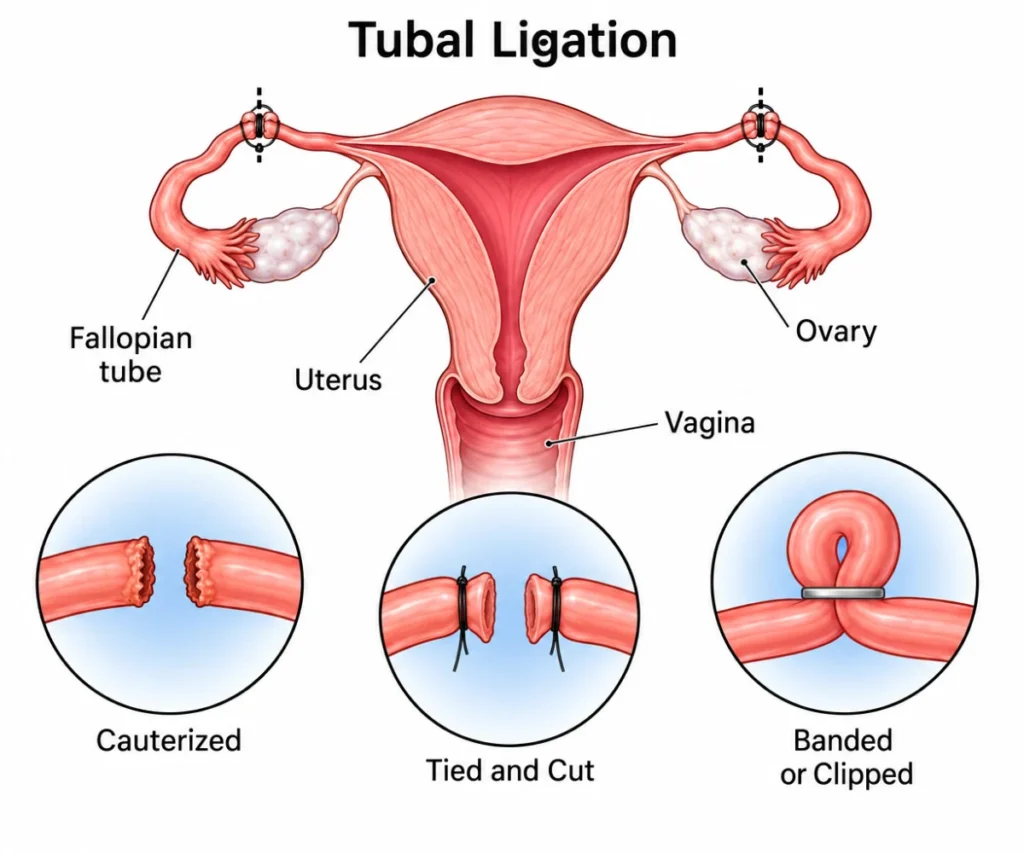
During tubal ligation, the fallopian tubes are blocked, sealed, divided or otherwise interrupted, preventing sperm and egg from meeting in the usual way. The uterus and ovaries remain in place, so the procedure does not normally stop periods or affect ovarian hormone production.
Unlike temporary or reversible contraception such as an IUD, implant or contraceptive pill, tubal ligation is intended to be permanent. Although reversal may be technically possible after some procedures, it cannot be guaranteed to restore fertility.
What is Tubal Ligation?
Tubal ligation, sometimes called female sterilisation or “getting your tubes tied,” is a procedure that permanently interrupts the fallopian tubes.
The fallopian tubes connect the area around the ovaries with the uterus. After ovulation, an egg is normally picked up by a fallopian tube. Fertilisation usually occurs within the tube if sperm reaches the egg. Tubal ligation prevents this by blocking the pathway.
Despite the common phrase “tubes tied,” the tubes are not necessarily literally tied. Depending on the surgical technique, they may be blocked, sealed, divided or partly removed.
The ovaries remain intact, continuing to release eggs and produce hormones, while the uterus also remains unaffected.
How is Tubal Ligation Performed?
Tubal ligation can be performed using different surgical techniques. The appropriate method depends on the clinical situation, previous surgery and when the procedure is being performed.
1. Laparoscopic Tubal Ligation
A common approach is laparoscopy, also known as keyhole surgery.
The procedure is generally performed under general anaesthesia. Small incisions are made in the abdomen and carbon dioxide gas is introduced to create space for the surgeon to see the pelvic organs.
A thin camera called a laparoscope is then inserted. The surgeon identifies the fallopian tubes and interrupts them using the planned technique.
The NHS describes laparoscopic female sterilisation as commonly involving two or three small abdominal incisions, followed by blocking or removing part of the tubes and sealing them.
2. Mini-Laparotomy
If laparoscopy is not appropriate, the fallopian tubes can sometimes be reached through a slightly larger abdominal incision. This is known as a mini-laparotomy.
Because the incision is larger, recovery is generally longer than after uncomplicated keyhole surgery.
3. Tubal Sterilisation during another operation
In selected circumstances, permanent contraception may be technically performed while a woman is already undergoing another abdominal operation, such as a Caesarean delivery.
However, the fact that the abdomen is already open does not automatically make sterilisation appropriate.
For a woman in Dubai, the medical indication and applicable UAE requirements still need to be considered beforehand.
How Effective is Tubal Ligation?
Tubal ligation is considered a highly effective method of permanent contraception, but it should not be described as guaranteeing that pregnancy can never occur.
A small number of pregnancies can occur after tubal sterilisation, and failure rates vary according to the technique used and other factors. This is important when counselling patients because terms such as “permanent” and “highly effective” should not be interpreted as “100% guaranteed.”
If pregnancy is suspected at any time after tubal ligation, it should be assessed rather than dismissed simply because sterilisation has previously been performed.
Does Tubal Ligation affect Periods?
Tubal ligation should not normally stop your periods.
The procedure acts on the fallopian tubes rather than the uterus or ovaries.
Your ovaries can therefore continue producing the hormones that regulate the menstrual cycle, and the lining of the uterus can continue to build up and shed.
Some women nevertheless notice that their periods seem different after surgery. One possible reason is a change in contraception.
For example, if hormonal contraception previously made your periods lighter and you stop it around the time of sterilisation, your natural menstrual pattern may return. That change can sometimes be attributed to the operation when it is actually related to stopping hormonal contraception.
Persistent heavy bleeding, worsening menstrual pain or other significant changes still deserve gynecological assessment.
Does Tubal Ligation affect Hormones or cause Menopause?
No. Tubal ligation does not normally cause menopause. The ovaries are not removed during the procedure, so ovarian hormone production generally continues.
This is different from an operation where both ovaries are removed. It is an important distinction because patients sometimes hear terms such as tubal ligation, salpingectomy and oophorectomy during discussions about pelvic surgery and understandably find them confusing.
Before any gynecological operation, Dr. Neha advises patients to be clear about which structure is being treated, what will remain, and what that means afterward.
What are the Benefits of Tubal Ligation?
The key benefits of tubal ligation include:
- Long-term pregnancy prevention: Provides permanent contraception without the need for ongoing contraceptive use.
- No daily medication: There is no daily contraceptive pill to remember.
- No routine device replacement: Unlike some contraceptive devices, tubal ligation does not require periodic replacement.
- Does not suppress ovarian hormone production: The procedure does not work by suppressing ovarian hormone production.
- Permanent contraception: It is intended to be permanent, so it may be suitable for women who are certain they do not want future pregnancies.
- Consider future reproductive plans: The decision should be considered alongside a woman’s long-term plans for having children, because reversal is not guaranteed.
What are the Risks of Tubal Ligation?
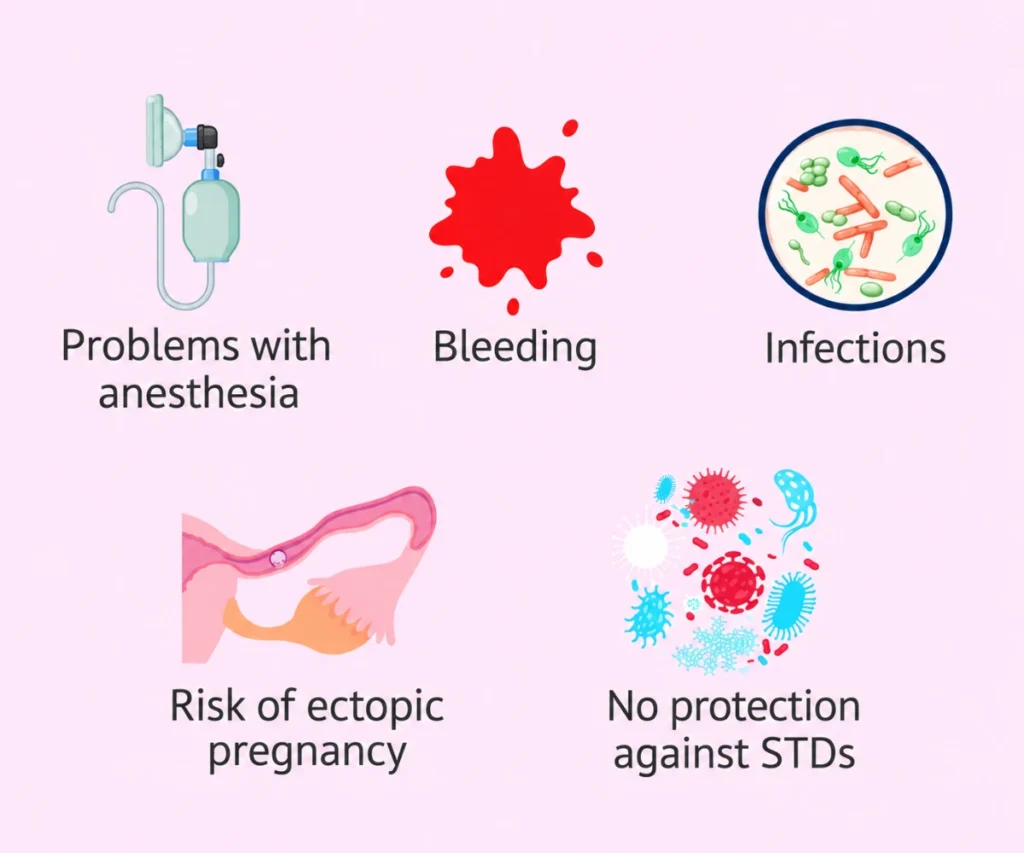
Tubal ligation is a surgical procedure, so it carries some potential risks and side effects. These may include:
- Bleeding: Bleeding can occur during or after surgery.
- Infection: There is a risk of infection at the surgical site or elsewhere following the procedure.
- Anaesthesia-related complications: As with other surgeries performed under anaesthesia, complications related to anaesthesia are possible.
- Injury to nearby structures: Rarely, nearby organs, blood vessels or other structures may be injured during surgery.
- Temporary abdominal symptoms: After laparoscopic surgery, some women may experience bloating, abdominal cramps, nausea or discomfort.
- Shoulder-tip pain: The gas used during laparoscopy can sometimes cause temporary shoulder-tip pain.
- Individual surgical considerations: Risk can vary depending on the surgical approach, previous abdominal or pelvic surgery, adhesions and other medical conditions.
- Need for individual assessment: A woman with previous abdominal operations, for example, may have different surgical considerations from someone without previous pelvic surgery.
That’s why your doctor will assess your health and medical history before deciding if tubal ligation is right for you.
Is Tubal Ligation Reversible?
Tubal ligation should be approached as permanent, even though reversal surgery may be possible after certain techniques.
A tubal reversal attempts to reconnect healthy remaining portions of the fallopian tube.
Whether that can be done depends on several factors, including how the original sterilisation was performed and how much healthy tube remains.
Even if reconnection is technically successful, pregnancy is not guaranteed.
Age, ovarian reserve, sperm factors and other fertility conditions can all influence the chance of pregnancy.
A woman who is unsure about future pregnancy should therefore discuss reversible contraception before proceeding with permanent surgery rather than choosing tubal ligation on the assumption that it can be reversed later.
What is Recovery like after Tubal Ligation?
Recovery depends on the surgical approach and whether tubal ligation was performed alone or as part of another procedure.
After uncomplicated laparoscopic sterilisation, women commonly experience some abdominal soreness and light vaginal bleeding for a few days.
The NHS advises approximately seven days away from work after laparoscopic sterilisation, while recovery following mini-laparotomy can require around two to four weeks away from work. It also recommends avoiding heavy lifting and exercise for approximately seven days after laparoscopy and longer after mini-laparotomy.
These are general timelines rather than rules for every patient. Your recovery can depend on your overall health, the exact operation performed and the physical demands of your work.
If tubal sterilisation is performed during another operation, recovery will largely be determined by that larger procedure.
When should you contact your doctor after surgery?
Your surgical team should provide individual discharge instructions.
Some discomfort during the first few days can be expected, but medical advice should be sought if you develop symptoms such as worsening abdominal pain, fever, increasing redness or discharge around an incision, heavy bleeding or feeling significantly unwell.
After any laparoscopic surgery, severe or unexpected symptoms should not simply be assumed to be part of normal recovery.
Tubal Ligation vs Salpingectomy: What is the difference?
Tubal ligation and salpingectomy both involve the fallopian tubes, but they are not the same procedure.
Tubal ligation interrupts the fallopian tubes by blocking, sealing, dividing or partly removing them.
A salpingectomy removes a fallopian tube. A bilateral salpingectomy removes both tubes completely.
Salpingectomy is also performed for medical reasons unrelated to contraception, such as certain ectopic pregnancies or severely damaged fallopian tubes.
For permanent contraception, the distinction matters because complete removal of both tubes has different implications for future fertility and reversibility.
Patients who need a detailed comparison can discuss with their gynecologist which procedure is actually being proposed and why, rather than treating the two terms as interchangeable.
What are the Alternatives to Tubal Ligation?
If reliable long-term contraception is required but permanence is uncertain, reversible options should be discussed first.
Depending on the woman’s health and preferences, these may include long-acting reversible contraceptive methods such as an intrauterine device or contraceptive implant, as well as other hormonal or non-hormonal methods.
The appropriate choice depends on factors such as menstrual symptoms, medical history, contraindications, previous experiences with contraception and future pregnancy plans.
For some women, the most appropriate alternative may therefore be a highly effective reversible method rather than surgery.
Tubal Ligation in Dubai: What are the UAE requirements?
This is a particularly important section for anyone searching specifically for tubal ligation in Dubai. Female sterilisation is regulated under UAE medical law.
Article 15 of the UAE Federal Decree-Law on Medical Liability states that an intervention for the purpose of sterilising a woman requires the opinion of a specialised medical committee comprising at least three physicians who determine that pregnancy or delivery would pose a definite risk to the mother’s life. It also specifies written approval from the woman and that the husband be informed.
This means tubal ligation in Dubai should not be presented as a routine elective service available simply because someone has completed their family.
The medical circumstances need to be assessed. For Dr. Neha Lalla, this makes the consultation especially important. The discussion starts with the reason permanent contraception is being considered and may include previous pregnancies, Caesarean deliveries or other pelvic surgery, significant medical conditions and the potential risk of another pregnancy.
Only then can the appropriate options and applicable requirements be discussed.
Why Medical Information about Tubal Ligation needs to be Balanced?
Healthcare information can influence major and sometimes irreversible decisions.
That is particularly relevant to a procedure such as tubal ligation because the decision affects future fertility.
Dubai Health Authority’s August 2026 standards for health advertising content on social media emphasise the credibility of health information, ethical communication and reliable information that enables patients to make appropriate treatment decisions.
Although those particular standards address social-media health advertising, the same principles of accurate, non-misleading patient information are appropriate when explaining a permanent procedure online.
This is why terms such as “risk-free,” “guaranteed” or “the best option” are not appropriate ways to describe tubal ligation.
Making the decision with the right information
Tubal ligation is not simply another contraceptive method that can be stopped whenever circumstances change. It is a surgical decision intended to permanently prevent pregnancy.
Before considering it, a woman should understand why permanent contraception is being recommended, how the procedure would be performed, its risks, what recovery involves, what alternatives remain available and what it could mean if her reproductive plans later change.
For women considering tubal ligation in Dubai, the UAE regulatory requirements are also an essential part of that discussion.
As a Consultant Obstetrician & Gynaecologist in Dubai, Dr. Neha Lalla’s role is to look at the decision within the woman’s complete clinical picture rather than discussing the procedure in isolation. Previous pregnancies, complications, Caesarean deliveries, pelvic surgery, medical conditions and the potential risks of another pregnancy may all influence the conversation.
The aim of consultation should be that you understand not only what tubal ligation is, but also why it is or is not appropriate in your particular circumstances.
If tubal ligation has been recommended as part of your care, discussing these questions with an experienced obstetrician and gynaecologist can help you make an informed decision based on your own health and reproductive plans.
Frequently Asked Questions on Tubal Ligation
1. Is tubal ligation permanent?
Yes. Tubal ligation is intended to provide permanent contraception. Some procedures may potentially be reversed, but reversal cannot be assumed to be possible or successful.
2. Is tubal ligation 100% effective?
No contraceptive procedure should be described as guaranteeing 100% prevention of pregnancy. Tubal sterilisation is highly effective, but pregnancy can occasionally occur.
3. Can pregnancy occur years after tubal ligation?
Yes, although it is uncommon. A positive pregnancy test after tubal ligation should be medically assessed, including consideration of ectopic pregnancy.
4. Does tubal ligation affect hormones?
Tubal ligation does not normally interfere with ovarian hormone production because the ovaries remain in place.
5. Will I still have periods after tubal ligation?
Yes. Sterilisation should not normally affect your hormone levels or periods.
6. Does tubal ligation cause early menopause?
No. Tubal ligation itself does not remove the ovaries and therefore does not cause surgical menopause.
7. Is tubal ligation the same as removing the fallopian tubes?
No. Traditional tubal ligation interrupts the tubes. Complete bilateral salpingectomy removes both fallopian tubes.
8. Who should discuss tubal ligation with a gynecologist in Dubai?
Women for whom permanent contraception has been raised because future pregnancy or delivery may pose significant medical concerns should discuss their individual circumstances with a qualified obstetrician and gynaecologist. UAE requirements also need to be considered before female sterilisation can be planned.
Medical Disclaimer
This article provides general educational information and does not replace individual medical advice, diagnosis or treatment. Eligibility for female sterilisation and the appropriate surgical approach depend on individual clinical circumstances and applicable UAE requirements.