
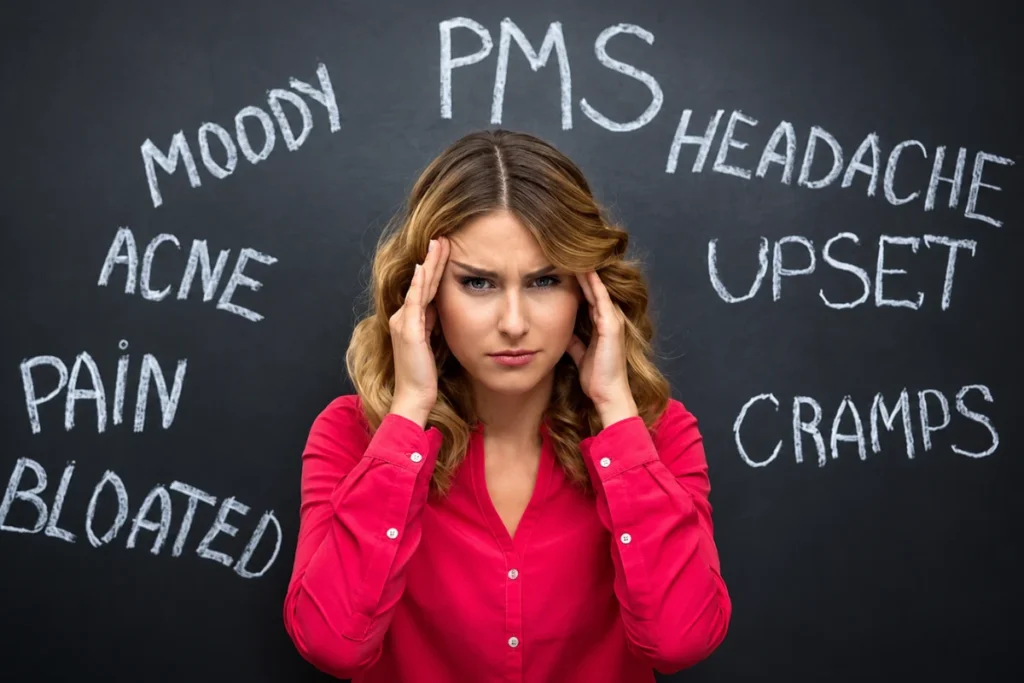
Feeling tired all the time. Gaining weight despite maintaining a healthy lifestyle. Dealing with irregular periods, acne, mood changes, or difficulty conceiving.
Many women experience these symptoms and assume they are simply part of a busy life, stress, or ageing. While these factors can certainly play a role, they may also be signs of a hormonal imbalance.
Hormones act as the body’s chemical messengers, influencing everything from menstrual cycles and fertility to metabolism, mood, sleep, and energy levels. When hormone levels become disrupted, even slightly, the effects can be felt throughout the body.
The good news is that hormonal imbalances are often manageable once the underlying cause is identified.
Understanding the signs of hormone-related issues and knowing when to seek help can be the first step toward feeling like yourself again.
What Is a Hormonal Imbalance?
Hormones are produced by various glands throughout the body and work together to regulate important functions such as:
- Menstrual cycles
- Ovulation
- Fertility
- Metabolism
- Mood
- Sleep
- Weight regulation
- Sexual health
- Energy levels
A hormonal imbalance occurs when there is too much or too little of a particular hormone, disrupting the body’s normal functions.
Hormonal changes can occur at different stages of life, but persistent symptoms often indicate that further evaluation may be needed.
Common Symptoms of Hormonal Imbalance in Women
Hormonal symptoms can vary significantly depending on which hormones are affected.
Some of the most common signs include:
- Irregular periods
- Heavy periods
- Missed periods
- Difficulty conceiving
- Acne
- Hair thinning
- Excess facial hair growth
- Weight gain
- Fatigue
- Mood swings
- Anxiety
- Sleep disturbances
- Low libido
- Hot flashes
- Vaginal dryness
Because many of these symptoms overlap with other medical conditions, proper assessment is essential.
Why Hormones Matter for Reproductive Health
The female reproductive system relies on a delicate balance of hormones to regulate:
- Menstrual cycles
- Ovulation
- Pregnancy
- Menopause
Even minor hormonal disruptions can affect:
- Fertility
- Cycle regularity
- Menstrual flow
- Overall well-being
This is why persistent hormonal symptoms should never be ignored.
PCOS and Hormonal Imbalance
One of the most common causes of hormone-related symptoms in reproductive-age women is Polycystic Ovary Syndrome.
PCOS affects hormone production and ovulation, often leading to irregular menstrual cycles and fertility challenges.
PCOS Hormonal Imbalance Symptoms
Common PCOS hormonal imbalance symptoms include:
- Irregular periods
- Absent periods
- Difficulty conceiving
- Weight gain
- Acne
- Excess facial or body hair
- Hair thinning
- Oily skin
However, PCOS affects women differently, and not every woman experiences the same symptoms.
Early diagnosis and treatment can help improve both reproductive and long-term health outcomes.
Thyroid Hormonal Issues and Women’s Health
The thyroid gland plays a critical role in regulating metabolism and overall body function.
When thyroid hormone levels become abnormal, menstrual and fertility issues may develop.
Thyroid Hormonal Issues Can Cause:
- Irregular periods
- Heavy periods
- Missed periods
- Fatigue
- Weight changes
- Hair loss
- Fertility difficulties
- Mood changes
Because thyroid disorders can mimic many other hormonal conditions, thyroid assessment is often an important part of a comprehensive hormonal evaluation.
Estrogen and Progesterone: Why Balance Matters
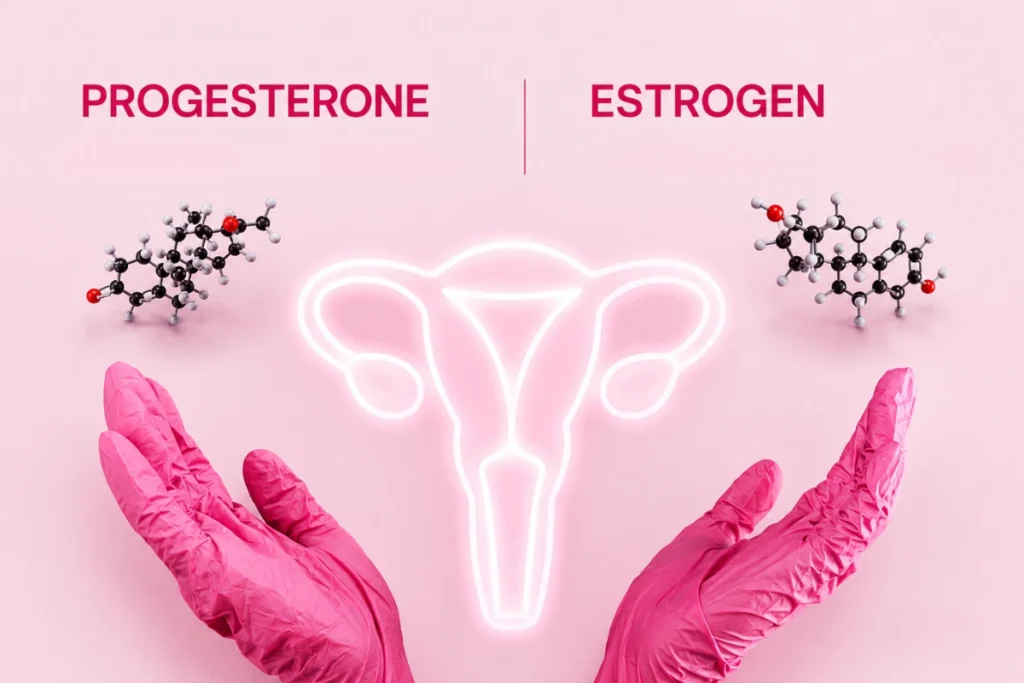
Two of the most important female reproductive hormones are estrogen and progesterone.
These hormones work together to regulate:
- Menstrual cycles
- Ovulation
- Pregnancy preparation
- Endometrial health
When the balance between these hormones is disrupted, symptoms may occur.
Possible Signs of Estrogen-Progesterone Imbalance
Women may experience:
- Irregular periods
- Heavy bleeding
- Spotting between periods
- Breast tenderness
- Mood changes
- Difficulty conceiving
- Sleep disturbances
Depending on the underlying cause, estrogen progesterone imbalance treatment may involve lifestyle changes, hormonal therapies, or management of specific medical conditions.
Other Causes of Hormonal Imbalance
Hormonal symptoms are not always caused by PCOS or thyroid disease.
Other possible causes include:
Perimenopause
The years leading up to menopause are often associated with hormonal fluctuations.
Symptoms may include:
- Irregular periods
- Hot flashes
- Sleep disturbances
- Mood changes
Stress
Chronic stress can influence hormonal pathways and affect menstrual regularity.
Weight Changes
Significant weight gain or weight loss may impact hormone production and ovulation.
Certain Medications
Some medications may alter hormone levels or affect menstrual cycles.
Pituitary or Adrenal Disorders
Although less common, these conditions may also contribute to hormonal symptoms.
How Is Hormonal Imbalance Diagnosed?
Because symptoms alone do not always reveal the underlying problem, diagnosis typically involves a combination of clinical assessment and testing.
Medical History
Your doctor will discuss:
- Menstrual cycle patterns
- Fertility goals
- Pregnancy history
- Symptom timeline
- Lifestyle factors
Physical Examination
Assessment may include evaluation of signs related to hormonal imbalance.
Female Hormone Testing
Comprehensive female hormone testing helps evaluate hormone levels and identify underlying causes.
Depending on symptoms, testing may include:
- Estrogen levels
- Progesterone levels
- Follicle-stimulating hormone (FSH)
- Luteinizing hormone (LH)
- Thyroid hormones
- Prolactin
- Androgen levels
Ultrasound Examination
Pelvic ultrasound may be used to evaluate the ovaries and uterus, particularly when PCOS or structural abnormalities are suspected.
Hormonal Imbalance Treatment Options
The most appropriate hormonal imbalance treatment depends entirely on the underlying diagnosis.
There is no one-size-fits-all solution.
Treatment may include:
Lifestyle Modifications
For many women, improvements in:
- Nutrition
- Exercise
- Sleep
- Stress management
can positively influence hormonal health.
Treatment of Underlying Conditions
Managing conditions such as PCOS or thyroid disorders often helps restore hormonal balance.
Hormonal Therapy
Certain patients may benefit from hormone-based treatments to regulate cycles and improve symptoms.
Fertility-Focused Treatment
Women trying to conceive may require ovulation induction or other fertility-focused interventions.
Menopause and Perimenopause Management
Targeted treatment may help address symptoms associated with hormonal transitions.
Can Hormonal Imbalances Affect Fertility?
Yes.
Hormonal balance plays a central role in ovulation and reproductive health.
Hormonal disorders may affect:
- Egg release
- Implantation
- Menstrual regularity
- Pregnancy outcomes
Women experiencing irregular cycles or difficulty conceiving should consider a comprehensive hormonal evaluation as part of their fertility assessment.
When Should You See a Gynaecologist?

You should seek medical advice if you experience:
- Irregular periods
- Missed periods
- Heavy menstrual bleeding
- Difficulty conceiving
- Unexplained weight changes
- Persistent fatigue
- Hair loss
- Acne
- Excess facial hair growth
- Symptoms affecting daily life
Early diagnosis often leads to more effective treatment and improved long-term health outcomes.
Why Self-Diagnosis Can Be Misleading
Many women turn to social media or online symptom checkers and assume they have a particular hormonal condition.
The challenge is that many hormonal disorders share similar symptoms.
For example:
- Fatigue may be caused by thyroid disease, anemia, stress, or hormonal imbalance.
- Irregular periods may be related to PCOS, thyroid disorders, perimenopause, or other conditions.
- Weight gain can occur for many different reasons.
This is why proper evaluation and targeted testing are so important.
Final Thoughts
Hormonal imbalances can affect every aspect of a woman’s health, from menstrual cycles and fertility to mood, energy, and overall quality of life.
The good news is that many hormonal conditions can be successfully managed once the underlying cause is identified.
Whether symptoms are related to PCOS, thyroid disorders, reproductive hormones, or life-stage hormonal changes, personalized evaluation is the key to finding the right solution.
If something feels different, persistent, or disruptive, it is worth getting checked rather than simply trying to push through it.
Dr Neha Lalla provides comprehensive hormonal health assessments, fertility evaluations, PCOS management, menstrual disorder treatment, and personalized women’s healthcare. Through detailed evaluation and evidence-based treatment plans, she helps women better understand their symptoms and regain hormonal balance.
If you are experiencing symptoms of hormonal imbalance, irregular periods, fertility concerns, or unexplained changes in your health, schedule a consultation to explore the cause and discuss the most appropriate treatment options for your individual needs.