
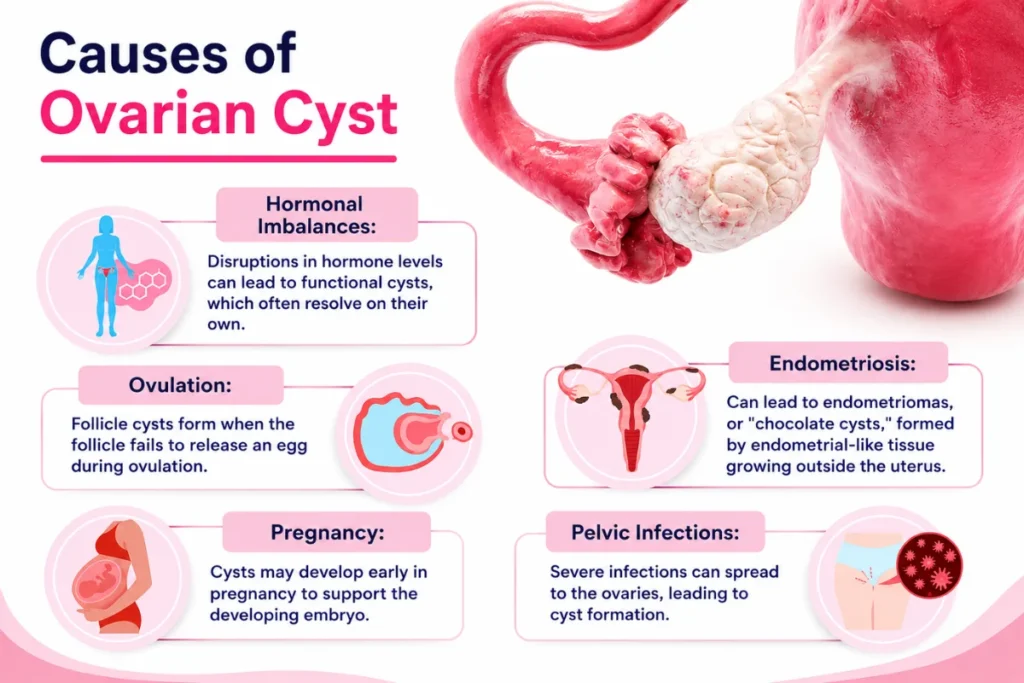
Hearing the words “ovarian cyst” after an ultrasound can be alarming for many women. It is natural to wonder whether the cyst is dangerous, whether it will affect fertility, or whether surgery will be needed.
The reality is that ovarian cysts are extremely common. In fact, many women will develop at least one ovarian cyst during their lifetime, often without even knowing it.
While most ovarian cysts are harmless and disappear on their own, some may cause symptoms, require monitoring, or need treatment. Understanding the different types of ovarian cysts and knowing when to seek medical advice can help reduce anxiety and ensure appropriate care.
If you have recently been diagnosed with an ovarian cyst or are experiencing symptoms that may be related to one, this guide will help you understand your options.
What Are Ovarian Cysts?
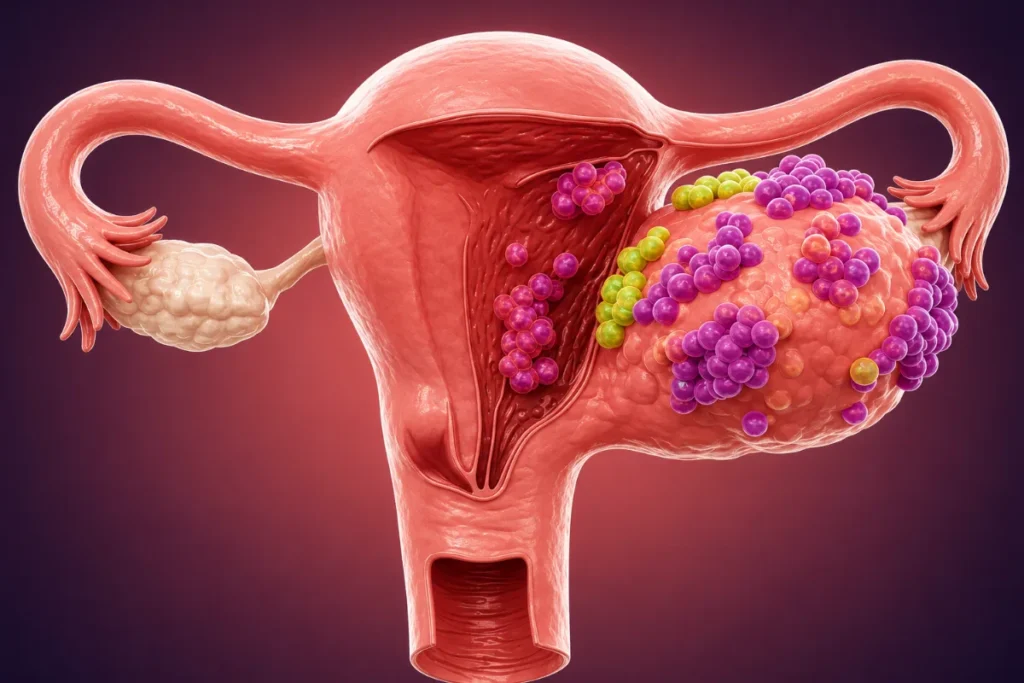
An ovarian cyst is a fluid-filled sac that develops on or within an ovary.
The ovaries are part of the female reproductive system and play an important role in hormone production and egg release. Because of their normal function, cysts can sometimes form naturally during the menstrual cycle.
Many ovarian cysts are discovered during routine ultrasounds and may cause no symptoms at all.
Others can grow larger and lead to discomfort, menstrual changes, or fertility concerns.
Are Ovarian Cysts Common?
Yes. Ovarian cysts are one of the most common findings in gynaecology.
Many women have cysts without ever realizing it because they:
- Cause no symptoms
- Resolve naturally
- Are found incidentally during imaging for unrelated reasons
The majority of ovarian cysts in premenopausal women are benign and do not require immediate intervention.
However, not every cyst should be treated the same way.
Types of Ovarian Cysts
Understanding the type of cyst is important because treatment recommendations vary significantly.
Functional Ovarian Cysts
These are the most common ovarian cysts.
They develop as part of the normal menstrual cycle and often disappear naturally within a few weeks or months.
Functional cysts usually do not require surgery.
Endometriomas
These cysts are associated with Endometriosis and contain old blood that may appear dark on imaging.
They can be associated with:
- Pelvic pain
- Painful periods
- Fertility challenges
Dermoid Cysts
Dermoid cysts are benign growths that may contain different tissue types such as hair, skin, or fat.
Although usually non-cancerous, larger dermoid cysts often require surgical removal.
Complex Ovarian Cysts
A complex cyst contains both fluid and solid components or has features that require closer evaluation.
Not all complex cysts are dangerous, but they often need careful assessment and follow-up.
PCOS-Related Ovarian Changes
Women with Polycystic Ovary Syndrome may have multiple small follicles visible on ultrasound.
These are not the same as large ovarian cysts but are often referred to as “PCOS cysts.”
Common Ovarian Cyst Symptoms
Many ovarian cysts cause no symptoms.
When symptoms occur, they may include:
- Pelvic pain
- Lower abdominal discomfort
- Bloating
- A feeling of pelvic pressure
- Pain during intercourse
- Irregular periods
- Pain during menstruation
- Frequent urination if the cyst presses on the bladder
Common ovarian cyst symptoms can vary depending on the size, type, and location of the cyst.
Some women experience only mild discomfort, while others may develop more significant symptoms that affect daily life.
When Can Ovarian Cysts Become a Problem?
Although many ovarian cysts are harmless, some situations require medical attention.
Persistent Growth
A cyst that continues to enlarge may need further evaluation.
Ongoing Symptoms
Persistent pain, pressure, or menstrual disturbances may indicate the need for treatment.
Ovarian Torsion
Larger cysts can sometimes cause the ovary to twist around its supporting structures.
This condition, known as ovarian torsion, is a medical emergency and may cause:
- Sudden severe pelvic pain
- Nausea
- Vomiting
Ruptured Cysts
Occasionally, a cyst may rupture and cause sudden pain.
Complex Features
Complex ovarian cysts often require more detailed assessment to determine the most appropriate management plan.
Ovarian Cysts and Fertility
Many women worry that ovarian cysts will affect their ability to conceive.
The answer depends on the type of cyst.
Most simple ovarian cysts do not interfere with fertility.
However, certain conditions associated with ovarian cysts may affect reproductive health, including:
- Endometriosis
- PCOS
- Large cysts affecting ovarian function
- Recurrent ovarian surgery
This is why fertility considerations are an important part of treatment planning for women of reproductive age.
PCOS Ovarian Cysts Treatment
One of the most misunderstood topics is PCOS ovarian cysts treatment.
Women with PCOS often hear they have “cysts on their ovaries,” but the small follicles seen in PCOS are not the same as the large cysts that sometimes require surgery.
Treatment for PCOS focuses on addressing:
- Hormonal imbalance
- Irregular periods
- Ovulation issues
- Fertility concerns
- Metabolic health
Management may include:
- Lifestyle modifications
- Weight management when appropriate
- Hormonal medications
- Ovulation induction for fertility treatment
- Long-term metabolic health monitoring
Surgery is rarely required solely for PCOS.
How Are Ovarian Cysts Diagnosed?
Diagnosis usually begins with a detailed medical history and pelvic examination.
Ultrasound
Ultrasound is the primary tool used to evaluate ovarian cysts.
It helps assess:
- Size
- Location
- Internal structure
- Complexity
- Blood flow characteristics
Blood Tests
In selected cases, blood tests may be recommended to provide additional information.
MRI or Advanced Imaging
Occasionally, further imaging may be required when ultrasound findings need clarification.
The goal is to determine whether a cyst is likely benign, requires monitoring, or needs treatment.
Ovarian Cyst Treatment Options
The most appropriate ovarian cyst treatment depends on several factors, including:
- Age
- Symptoms
- Size of the cyst
- Ultrasound findings
- Fertility goals
- Risk profile
Observation and Monitoring
Many simple ovarian cysts resolve naturally.
Regular follow-up scans may be all that is required.
Medical Management
Certain symptoms may be managed with medication when appropriate.
Surgical Treatment
Surgery may be recommended when:
- The cyst is large
- Symptoms are significant
- The cyst persists over time
- Complex features are present
- There is concern regarding diagnosis
What Is Laparoscopic Ovarian Cystectomy?
When surgery is needed, a minimally invasive approach is often preferred.
Laparoscopic ovarian cystectomy is a procedure used to remove an ovarian cyst while preserving healthy ovarian tissue whenever possible.
The surgery is performed through small abdominal incisions using:
- A laparoscope (camera)
- Specialized surgical instruments
- Minimally invasive surgical techniques
The goal is to remove the cyst while protecting ovarian function.
Benefits of Laparoscopic Ovarian Cystectomy
Compared to traditional open surgery, laparoscopic surgery may offer:
- Smaller scars
- Less postoperative pain
- Faster recovery
- Reduced hospital stay
- Quicker return to normal activities
- Better cosmetic results
For many women, it represents an effective and fertility-conscious treatment option.
Complex Ovarian Cyst Removal in Dubai
Women diagnosed with complex ovarian cysts often require specialized evaluation and individualized treatment planning.
When considering complex ovarian cyst removal in Dubai, it is important to consult a gynaecologist experienced in advanced laparoscopic surgery and ovarian preservation techniques.
Every case is unique, and treatment decisions should be based on careful assessment rather than ultrasound findings alone.
When Should You See a Gynaecologist?
You should seek medical evaluation if you experience:
- Persistent pelvic pain
- Abdominal bloating
- Irregular periods
- Sudden severe pelvic pain
- Pain during intercourse
- Increasing abdominal size
- Fertility concerns
- An ovarian cyst identified on imaging
Early assessment often allows simpler management and greater peace of mind.
Final Thoughts
Ovarian cysts are common and, in most cases, not a cause for alarm. However, understanding the type of cyst, recognizing symptoms, and obtaining an accurate diagnosis are essential for making informed treatment decisions.
While many cysts resolve naturally, others may require monitoring, medical management, or surgical treatment. Modern techniques such as laparoscopic ovarian cystectomy allow many women to receive effective treatment with minimal disruption to daily life and fertility preservation whenever possible.
The key is individualized care based on your symptoms, reproductive goals, and overall health.
Dr. Neha Lalla provides personalized evaluation and treatment for a range of hormonal concerns, helping women understand the underlying causes and find the right approach for better hormonal health.
Whether you are experiencing symptoms of PCOS, thyroid-related hormonal changes, or an imbalance in estrogen and progesterone, a thorough assessment can help identify the most suitable treatment plan. Female hormone testing may also be recommended when needed to better understand your hormonal health.
Schedule a consultation with Dr. Neha Lalla to discuss your symptoms and explore personalized hormonal imbalance treatment options.