

Many women experience changes in their menstrual cycle at some point in life. A period may arrive a few days early, last longer than usual, or feel heavier than previous months.
Occasional variations can be completely normal.
However, when bleeding becomes unpredictable, unusually heavy, occurs between periods, or appears after menopause, it may be a sign that something needs medical attention.
One of the most common reasons women visit a gynaecologist is abnormal uterine bleeding. Yet many women are unsure whether what they are experiencing is actually normal or a cause for concern.
Understanding the difference can help you seek the right care at the right time.
What Is Considered a Normal Period?
A normal menstrual cycle varies from woman to woman.
In general, a healthy menstrual cycle typically:
- Occurs every 21 to 35 days
- Lasts between 2 and 7 days
- Has a predictable pattern
- Does not significantly interfere with daily activities
Some variation from month to month can occur due to:
- Stress
- Travel
- Weight changes
- Illness
- Hormonal fluctuations
These occasional changes are usually not concerning.
The issue arises when bleeding becomes persistent, excessive, irregular, or significantly different from your usual pattern.
What Is Abnormal Uterine Bleeding?
Abnormal uterine bleeding refers to any bleeding pattern that differs from what is considered normal for your age and reproductive stage.
This may include:
- Very heavy periods
- Bleeding between periods
- Periods that occur too frequently
- Periods that are absent for long periods and then become very heavy
- Bleeding after sexual intercourse
- Bleeding after menopause
- Prolonged menstrual bleeding
Abnormal bleeding is a symptom, not a diagnosis.
The most important step is identifying the underlying cause.
Common Signs You Should Not Ignore
Bleeding Between Periods
One of the most common warning signs is bleeding between periods.
While occasional spotting may occur around ovulation or due to hormonal changes, persistent or recurrent bleeding between cycles should always be evaluated.
Potential causes include:
- Uterine polyps
- Fibroids
- Hormonal imbalance
- Cervical conditions
- Endometrial abnormalities
- Infections
If spotting keeps recurring, it is worth discussing with your gynaecologist.
Heavy Menstrual Bleeding
Many women assume heavy periods are normal because they have experienced them for years.
However, excessive bleeding can affect:
- Energy levels
- Iron stores
- Daily activities
- Quality of life
Signs of heavy bleeding include:
- Passing large blood clots
- Changing sanitary products every hour
- Bleeding through clothing or bedding
- Periods lasting longer than seven days
- Symptoms of anemia such as fatigue or dizziness
Heavy periods should never be dismissed simply because they have always been present.
Irregular Menstrual Cycles
Occasionally irregular cycles can occur, but persistent cycle irregularity often signals an underlying issue.
Common irregular periods causes include:
- Polycystic ovary syndrome (PCOS)
- Thyroid disorders
- Stress
- Significant weight changes
- Perimenopause
- Hormonal imbalance
- Certain medications
Understanding the cause is essential because treatment varies depending on the underlying condition.
What Causes Abnormal Bleeding?
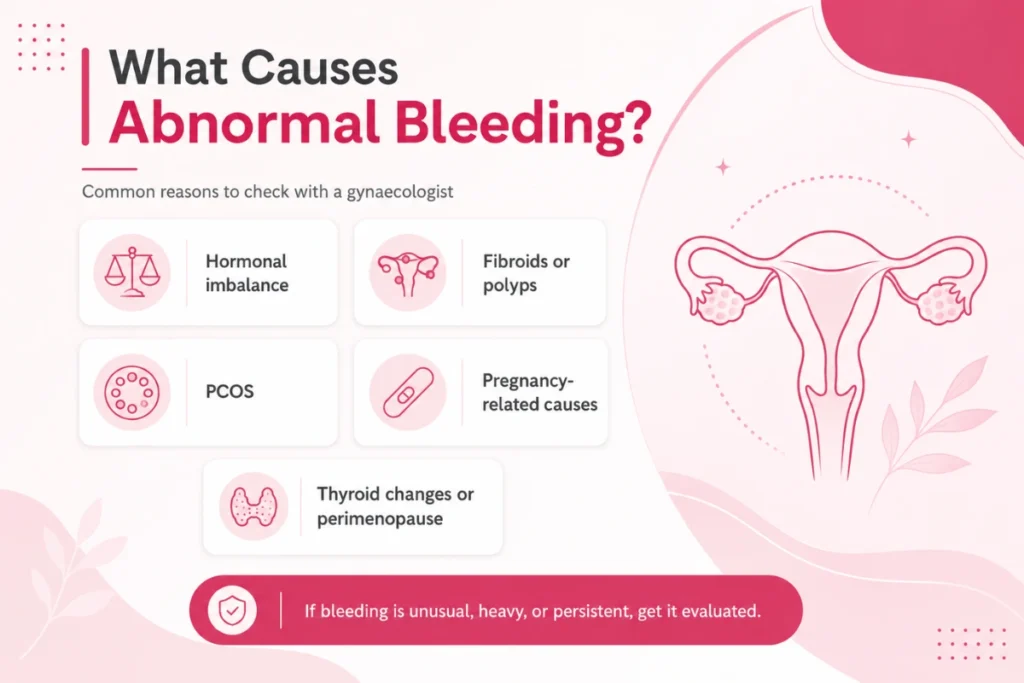
Several gynaecological and hormonal conditions can lead to abnormal bleeding.
Hormonal Imbalances
Hormones regulate the menstrual cycle.
When hormonal signals become disrupted, irregular bleeding patterns may develop.
Hormonal causes may include:
- PCOS
- Thyroid disorders
- Perimenopause
- Ovulation disorders
Uterine Fibroids
Fibroids are non-cancerous growths within the uterine muscle.
Depending on their size and location, fibroids may cause:
- Heavy periods
- Pelvic pressure
- Prolonged bleeding
- Fertility challenges
Uterine Polyps
Polyps are growths that develop within the uterine lining.
Common symptoms include:
- Spotting between periods
- Irregular bleeding
- Heavy menstrual flow
Adenomyosis
Adenomyosis occurs when tissue similar to the uterine lining grows into the muscular wall of the uterus.
This condition may cause:
- Heavy periods
- Severe menstrual pain
- Pelvic pressure
Pregnancy-Related Causes
Abnormal bleeding during pregnancy always requires medical evaluation.
Endometrial Abnormalities
Changes within the uterine lining may also contribute to abnormal bleeding and require further investigation.
Understanding Dysfunctional Uterine Bleeding
The term dysfunctional uterine bleeding has traditionally been used to describe abnormal bleeding that occurs without an obvious structural cause such as fibroids or polyps.
In many cases, the underlying issue involves hormonal dysfunction affecting ovulation.
Women may experience:
- Irregular periods
- Unpredictable bleeding
- Heavy bleeding episodes
- Long gaps between periods
Modern diagnostic approaches focus on identifying the exact cause rather than simply labeling bleeding as dysfunctional.
Why Postmenopausal Bleeding Should Never Be Ignored
One of the most important bleeding symptoms to recognize is postmenopausal bleeding.
Menopause is defined as the absence of menstrual periods for 12 consecutive months.
Any vaginal bleeding that occurs after menopause requires prompt evaluation.
While many causes are benign, postmenopausal bleeding may be associated with:
- Endometrial polyps
- Endometrial thinning
- Hormonal changes
- Endometrial hyperplasia
- Endometrial cancer
Early assessment allows serious conditions to be identified and treated promptly if necessary.
Even a small amount of bleeding after menopause should never be ignored.
How Is Abnormal Uterine Bleeding Diagnosed?
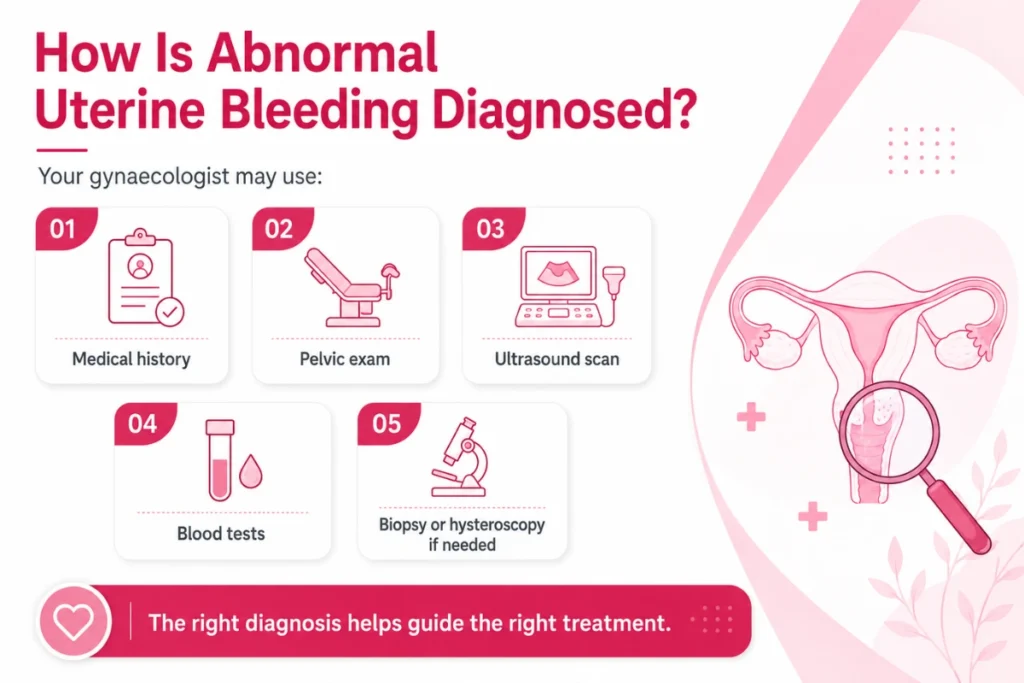
A thorough evaluation is essential because many different conditions can produce similar symptoms.
Your gynaecologist may recommend:
Medical History and Symptom Assessment
Understanding the pattern of bleeding often provides important clues.
Pelvic Examination
Physical examination helps identify possible structural causes.
Ultrasound
Ultrasound is commonly used to assess:
- Fibroids
- Polyps
- Ovarian abnormalities
- Endometrial thickness
Blood Tests
Hormonal evaluation may include:
- Thyroid function
- Reproductive hormones
- Iron levels
- Pregnancy testing when appropriate
Hysteroscopy
A hysteroscopy allows direct visualization of the uterine cavity and can help diagnose polyps, fibroids, and endometrial abnormalities.
Endometrial Sampling
In selected cases, a sample of the uterine lining may be recommended for further analysis.
Abnormal Uterine Bleeding Treatment Options
The most appropriate abnormal uterine bleeding treatment depends entirely on the underlying diagnosis.
Treatment options may include:
Medical Management
This may involve:
- Hormonal therapy
- Medications to reduce bleeding
- Treatment of hormonal disorders
- Iron supplementation when anemia is present
Minimally Invasive Procedures
Procedures may include:
- Hysteroscopic polyp removal
- Hysteroscopic fibroid removal
- Endometrial procedures in selected patients
Surgical Treatment
When symptoms are severe or structural abnormalities are significant, surgical management may be recommended.
Treatment should always be individualized based on:
- Age
- Symptoms
- Reproductive goals
- Medical history
- Underlying diagnosis
When Should You See a Gynaecologist?
You should schedule an evaluation if you experience:
- Bleeding between periods
- Heavy menstrual bleeding
- Irregular cycles
- Bleeding after intercourse
- Bleeding after menopause
- Prolonged periods
- Severe menstrual symptoms
- Symptoms of anemia
Early evaluation often leads to simpler treatment and better outcomes.
Final Thoughts
Not every change in your menstrual cycle is a cause for concern, but persistent or unusual bleeding should never be ignored.
Abnormal uterine bleeding can result from a wide range of causes, from hormonal imbalances and ovulation disorders to fibroids, polyps, and endometrial conditions.
The key is understanding what is normal for your body and recognizing when something changes.
Timely diagnosis allows the underlying cause to be identified and treated appropriately, helping you regain confidence, comfort, and control over your reproductive health.
Dr. Neha Lalla specializes in the diagnosis and management of abnormal uterine bleeding, heavy periods, fibroids, polyps, fertility concerns, and minimally invasive gynaecological procedures. Through comprehensive evaluation and personalized treatment plans, she helps women find answers and effective solutions for even the most complex menstrual concerns.
If you are experiencing abnormal bleeding, irregular periods, or postmenopausal bleeding, schedule a consultation to understand the cause and discuss the most appropriate treatment options for your individual needs.