

Starting this journey can feel exciting, emotional, and slightly overwhelming. Many couples begin searching for answers the moment they decide to take the next step in their marriage. The idea of trying to conceive after marriage often comes with questions about health, timing, and what to expect, especially if you are doing this for the first time. The good news is that most early steps are simple, practical, and give you a strong foundation for a healthy pregnancy.
As a newly married couple, it is natural to want clarity and reassurance. You may be curious about the best time to get pregnant, wondering whether you need tests, or trying to understand how your lifestyle influences fertility. This is the phase where the right information can make all the difference. With awareness, preparation, and a little patience, you can take confident steps towards conception.
Understanding the Basics Before You Start Trying
For most couples, the process begins with gaining clarity about how the body prepares for pregnancy. When couples start discussing how to get pregnant fast after marriage, they often expect quick results, but understanding your reproductive health is the real starting point.
Your menstrual cycle is central to this. If you are aware of your ovulation window, you naturally increase the chances of successful conception. Ovulation typically happens around the middle of the cycle, but every woman’s body works differently, which is why learning your natural rhythm is important. Tracking your periods for a few months gives you a realistic picture of how your cycle behaves.
Why a Preconception Checkup Matters
A preconception checkup is one of the most valuable steps you can take before trying. Think of it as a proactive health review that ensures your body is ready for pregnancy. This checkup assesses your medical history, lifestyle, and any underlying concerns that may affect fertility.
A basic evaluation includes blood tests, thyroid function checks, and nutritional assessments. Many women discover vitamin deficiencies during this stage, and correcting them early supports both fertility and a healthy pregnancy. If you have irregular periods, long cycles, or symptoms of hormonal imbalance, your doctor may explore those further. This early awareness can prevent delays once you begin trying.
Preparing Your Body for Conception
Your body needs the right environment to support conception. That does not mean extreme diets or drastic lifestyle changes. It simply means creating habits that help your hormones, menstrual cycles, and overall reproductive health stay balanced.
Focus on balanced meals, regular sleep, and moderate exercise. Foods rich in folate, iron, healthy fats, and antioxidants support the reproductive system. Beginning folic acid supplements at least one to three months before trying is usually recommended. It reduces certain birth risks and prepares your body for pregnancy.
Couples often overlook stress as a factor. High stress levels affect ovulation and sperm quality. Building simple routines like walking, yoga, or meditation can help regulate stress and create emotional balance during this journey.
Understanding the Best Time to Conceive After a Wedding
Many couples ask about the best time to conceive after a wedding. There is no single rule; it depends on your emotional readiness, health, career plans, and family goals. From a medical perspective, there is no minimum waiting period unless you have specific pre-existing conditions that require stabilisation.
However, allowing yourself a few months to settle into married life, adjust routines, and complete your preconception checkup can make the process smoother. Some couples choose to start trying immediately, while others wait until they feel mentally and physically prepared. What matters is that you make a decision that aligns with your comfort and health.
Fertility Tips for Newlyweds Beginning Their Journey
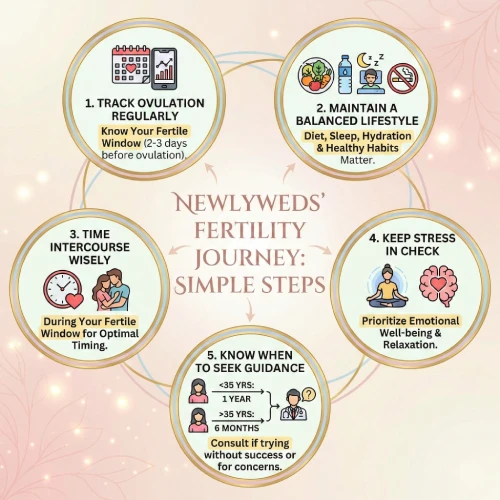
As newlyweds, you might be searching for simple ways to increase your chances of conceiving. Here are some supportive steps that make a real difference.
Track Ovulation Regularly
Understanding your fertile window is essential. You are most likely to conceive in the two to three days leading up to ovulation. You can track this using apps, ovulation predictor kits, or by observing your cervical mucus changes. This step alone improves your timing significantly.
Maintain a Balanced Lifestyle
Lifestyle plays a larger role than many realise. A balanced diet, good hydration, and adequate sleep support hormone regulation. Avoiding smoking and limiting alcohol intake also helps improve egg and sperm health.
Have Intercourse During the Fertile Window
Timing intercourse during the fertile days ensures that sperm are present when ovulation occurs. Every couple’s routine is different, and communication helps you both stay relaxed during this phase.
Keep Stress in Check
Stress affects the hypothalamus, which regulates your reproductive hormones. Newlyweds often manage new responsibilities, routines, and expectations, making this period more stressful than expected. Prioritising emotional well-being improves your chances naturally.
Know When to Seek Guidance
If you have been trying for a while without success, it is alright to seek professional help. For women under 35, a year of trying is usually recommended before seeking consultation, and for women over 35, six months. However, if you have irregular cycles, painful periods, or known medical concerns, reaching out earlier provides clarity.
How to Get Pregnant Fast After Marriage: What Actually Works
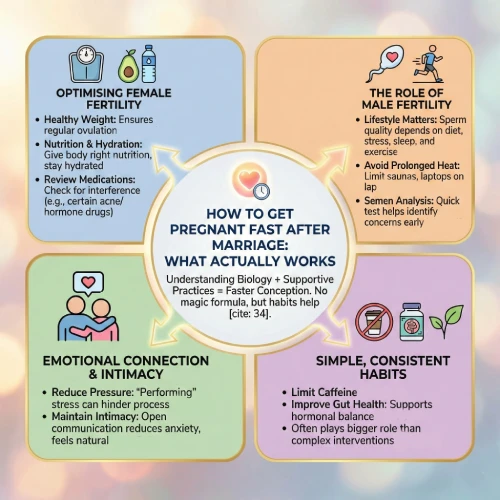
There is no formula for instant conception, but certain habits and decisions help the process along. Many newlyweds look for quick answers, but what works best is understanding your biology and supporting it with the right practices.
Optimising your fertility means giving your body the right nutrition, staying active, and being mindful about reproductive health. Maintaining a healthy weight ensures regular ovulation. Extreme weight loss or gain affects hormonal balance and delays conception. Reviewing your medications is also a key part of your early steps. Some medicines, including certain acne treatments and hormone-based drugs, may interfere with fertility or pregnancy.
Limiting caffeine, staying hydrated, and improving gut health also support hormonal balance. These simple, consistent habits often play a bigger role than complex interventions.
The Role of Male Fertility
Couples often focus on the woman’s health alone, but male fertility is equally important. Sperm quality depends on lifestyle, diet, stress, and even sleep. Men benefit from balanced meals, regular exercise, and avoiding prolonged heat exposure, such as saunas or placing laptops directly on the lap. A basic semen analysis is quick and helps identify any concerns early.
Emotional Connection and Intimacy
Conception is not only about biology; the relationship between you and your partner matters too. Pressure to “perform” during fertile days can cause stress. Maintaining intimacy, open communication, and emotional closeness helps the process feel natural rather than forced. Many couples find that understanding each other’s expectations reduces anxiety and makes the journey more fulfilling.
When Should You Consider a Preconception Checkup?
A preconception checkup is helpful for every couple, not only those facing difficulty. If you are starting your fertility journey or planning, this visit gives you clarity. Your doctor will assess your health, suggest any supplements, and help you understand your fertile window accurately. If there are any underlying concerns, such as thyroid issues, PCOS, anaemia, or previous medical history, addressing them before trying offers a smoother experience.
How Long Does It Usually Take to Conceive?
Most healthy couples conceive within a year, even when everything is normal. This timeline is completely natural. Only a small percentage conceive in the first few months. Ovulation, timing, stress, and overall health all influence how quickly it happens. Understanding this helps set realistic expectations and reduces pressure on the process.
Creating a Supportive Environment as Newlyweds
Being newly married is already a period of adjustment. Adding the journey of trying to conceive can bring excitement and questions. Staying informed, supporting each other, and keeping communication open helps the journey stay positive.
If you feel unsure or overwhelmed, speaking with a specialist can offer reassurance and guidance tailored to your needs. Every couple is unique, and personalised advice often brings clarity.
Conclusion
Trying to conceive after marriage is a meaningful milestone, and understanding your body, health, and timing helps you begin with confidence. If you would like personalised guidance, you can reach out to Dr. Neha at Prime Hospital, Dubai, on +971 50 307 3225. Book your consultation to begin your fertility journey with clarity and support.