
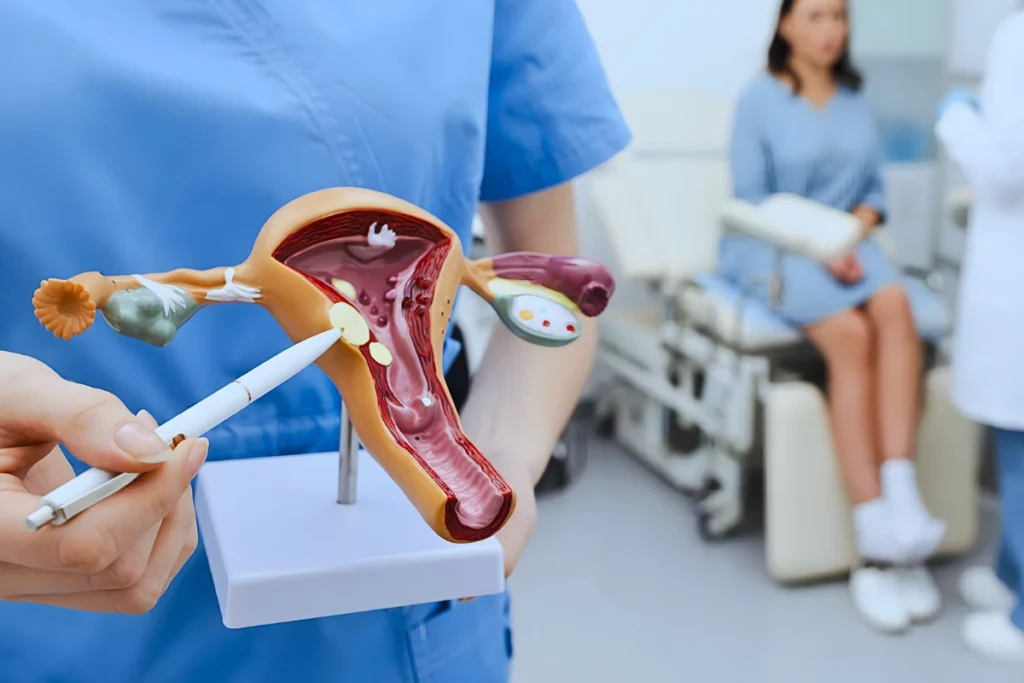
Heavy periods are often dismissed as something women simply have to live with. Many women spend years planning their lives around their menstrual cycle, carrying extra sanitary products everywhere, avoiding social events during their periods, or constantly worrying about unexpected bleeding.
But excessively heavy periods are not always normal.
If your menstrual bleeding is affecting your daily life, causing fatigue, or making you feel anxious every month, it may be time to investigate the underlying cause.
One of the most valuable tools in modern gynaecology for evaluating and treating abnormal bleeding is hysteroscopy. This minimally invasive procedure allows your gynaecologist to look directly inside the uterus and identify problems that may not always be visible on routine scans.
For many women, hysteroscopy for heavy periods provides both answers and treatment, often in the same procedure.
When Is a Period Considered Too Heavy?
Every woman experiences menstruation differently, but certain signs suggest bleeding may be heavier than normal.
Heavy menstrual bleeding, medically known as menorrhagia, may involve:
- Needing to change pads or tampons every hour
- Passing large blood clots
- Bleeding for longer than seven days
- Frequently leaking through sanitary protection
- Waking at night to change pads
- Feeling tired, weak, or dizzy during periods
- Developing iron deficiency or anemia
- Missing work, school, or social activities because of bleeding
While many women assume heavy periods are simply part of their body’s normal pattern, persistent heavy bleeding often has an underlying cause that should be evaluated.
Understanding Abnormal Uterine Bleeding
Not all heavy periods are caused by the same condition.
In some women, bleeding may be related to hormonal changes. In others, there may be structural abnormalities inside the uterus that contribute to excessive bleeding.
This is why obtaining an accurate abnormal uterine bleeding diagnosis is so important.
Common causes of heavy menstrual bleeding include:
- Uterine polyps
- Submucosal fibroids
- Thickening of the uterine lining
- Endometrial hyperplasia
- Hormonal imbalance
- Adenomyosis
- Endometrial abnormalities
- Perimenopausal changes
- Certain medications
- Bleeding disorders
The challenge is that many of these conditions may produce similar symptoms.
Finding the exact cause helps guide the most effective treatment.
What Is Hysteroscopy?
Hysteroscopy is a minimally invasive procedure that allows a gynaecologist to examine the inside of the uterus using a thin camera called a hysteroscope.
The hysteroscope is gently passed through the cervix into the uterus without any abdominal incisions.
The camera provides a clear, magnified view of:
- The uterine cavity
- The endometrial lining
- Polyps
- Fibroids
- Scar tissue
- Structural abnormalities
Unlike ultrasound, which provides an image from outside the uterus, hysteroscopy allows direct visualization of the uterine cavity.
This often makes diagnosis far more accurate.
Why Is Hysteroscopy Helpful for Heavy Periods?
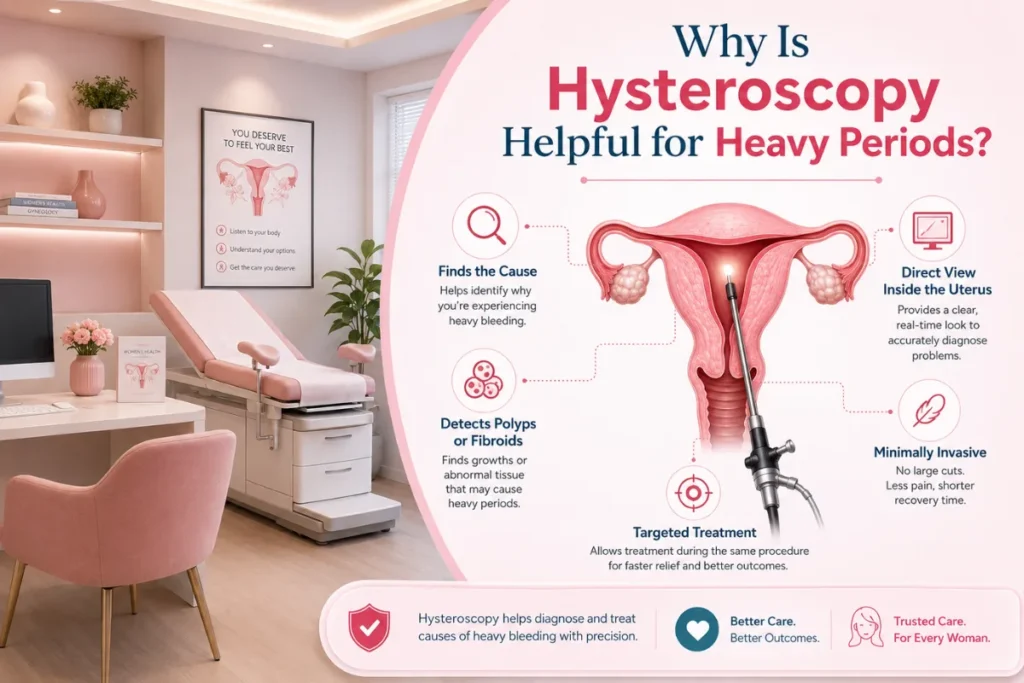
When heavy bleeding continues despite medication or when ultrasound findings are unclear, hysteroscopy often becomes one of the most effective diagnostic tools available.
The procedure helps identify conditions that may otherwise remain hidden.
Detecting Uterine Polyps
Polyps are small growths that develop within the lining of the uterus.
Even relatively small polyps can cause:
- Heavy periods
- Irregular bleeding
- Spotting between periods
Hysteroscopy allows direct visualization and removal of these polyps during the same procedure.
Identifying Submucosal Fibroids
Fibroids located inside the uterine cavity are a common cause of excessive menstrual bleeding.
These fibroids can interfere with the normal function of the uterine lining and contribute to prolonged or heavy periods.
Hysteroscopy helps identify these fibroids and, in many cases, allows them to be removed without major surgery.
Evaluating the Endometrial Lining
Sometimes heavy bleeding occurs because of abnormalities within the uterine lining itself.
Hysteroscopy allows the lining to be assessed directly and enables targeted tissue sampling when necessary.
This is especially important in women who experience:
- Persistent abnormal bleeding
- Bleeding after menopause
- Recurrent unexplained heavy periods
Diagnosing Scar Tissue or Structural Changes
Previous surgeries, infections, or uterine abnormalities can sometimes affect menstrual bleeding patterns.
Hysteroscopy helps identify these structural issues and assists in planning appropriate treatment.
Hysteroscopy: Diagnosis and Treatment in One Procedure
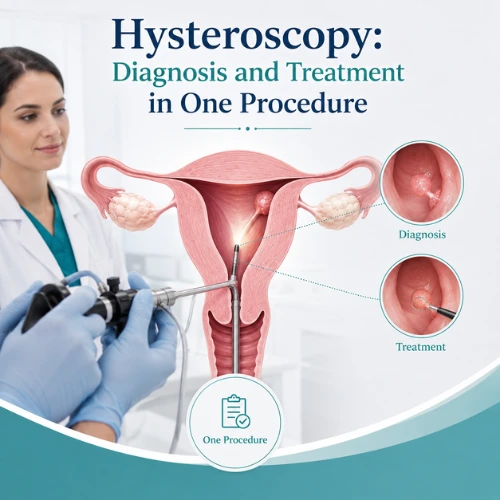
One of the biggest advantages of hysteroscopy is that it often serves both diagnostic and therapeutic purposes.
Instead of simply identifying a problem, the procedure frequently allows treatment at the same time.
For example:
- Polyps can often be removed immediately
- Small fibroids may be treated during the procedure
- Tissue samples can be obtained when needed
- Adhesions or scar tissue can be addressed
This reduces the need for multiple procedures and often speeds up the treatment process.
What Happens During a Hysteroscopy?
The exact process depends on whether the procedure is diagnostic or operative.
Generally, hysteroscopy involves:
- Insertion of a thin hysteroscope through the cervix
- Gentle expansion of the uterine cavity using sterile fluid
- Careful inspection of the uterine lining
- Identification of any abnormalities
- Treatment of suitable abnormalities when indicated
The procedure is typically performed as a day-care procedure, meaning most patients return home the same day.
Is Hysteroscopy Painful?
Many women are understandably concerned about discomfort.
The experience varies depending on the type of hysteroscopy performed.
Diagnostic hysteroscopy is generally well tolerated and may involve mild cramping similar to menstrual cramps.
Operative hysteroscopy is often performed under anesthesia to ensure patient comfort.
Most women recover quickly and are able to resume normal activities within a short period.
Recovery After Hysteroscopy
Recovery is usually straightforward.
Some women experience:
- Mild cramping
- Light spotting
- Temporary pelvic discomfort
These symptoms generally improve within a few days.
Most patients can return to their routine activities relatively quickly, depending on the extent of the procedure.
Your gynaecologist will provide individualized guidance regarding activity levels and follow-up care.
What Are the Benefits of Hysteroscopy for Heavy Periods?
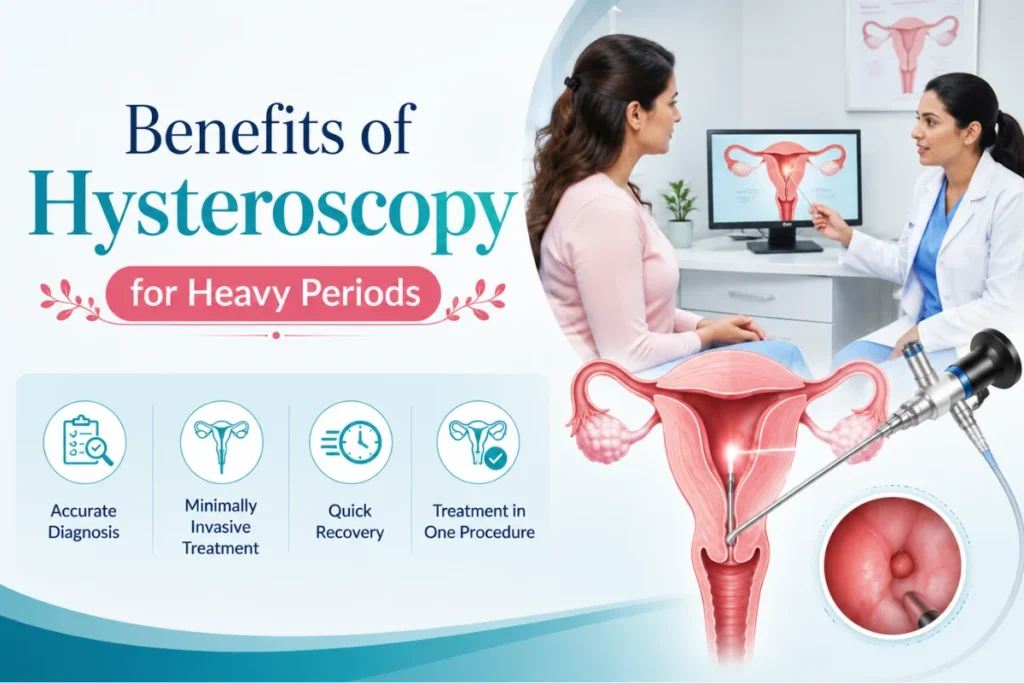
Compared with blind procedures or relying solely on imaging, hysteroscopy offers several advantages.
More Accurate Diagnosis
Direct visualization allows a more precise assessment of the uterine cavity.
Targeted Treatment
Abnormalities can often be treated immediately rather than requiring separate procedures.
Minimally Invasive Approach
No abdominal incisions are required.
Faster Recovery
Most women experience minimal downtime.
Improved Symptom Relief
Treating the underlying cause often leads to significant improvement in menstrual bleeding.
What Are the Available Menorrhagia Treatment Options?
Treatment depends entirely on the cause of bleeding.
Some women benefit from medication, while others may require procedural intervention.
Common menorrhagia treatment options include:
- Hormonal therapies
- Oral medications to reduce bleeding
- Intrauterine devices (IUDs)
- Hysteroscopic polyp removal
- Hysteroscopic fibroid removal
- Endometrial procedures in selected cases
- Surgical management when necessary
The best treatment is always the one tailored to your individual diagnosis and future reproductive goals.
When Should You Seek Medical Advice for Heavy Periods?
You should consider seeing a gynaecologist if:
- Your periods are becoming progressively heavier
- You pass large clots regularly
- You feel exhausted or develop anaemia
- You bleed between periods
- Your periods interfere with work, travel, or daily life
- You experience bleeding after menopause
Heavy periods are common, but they should never be ignored.
Early evaluation often leads to simpler treatment and better outcomes.
Choosing the Right Specialist for Heavy Periods
When dealing with persistent heavy bleeding, finding the right diagnosis is just as important as finding the right treatment.
An experienced gynaecologist can help determine whether your symptoms are related to hormonal factors, fibroids, polyps, endometrial changes, or other underlying conditions.
If you are searching for the best gynaecologist for heavy periods, look for a specialist experienced in advanced diagnostic procedures, such as hysteroscopy, and in minimally invasive gynaecological surgery.
Final Thoughts
Heavy periods are not simply an inconvenience. They can affect physical health, emotional well-being, energy levels, fertility, and overall quality of life.
Hysteroscopy has transformed the way we investigate and manage abnormal uterine bleeding by allowing us to visualize the uterine cavity directly and often treat the problem at the same time.
For many women, hysteroscopy for heavy periods provides the clarity needed to move from years of uncertainty to a clear diagnosis and effective treatment plan.
Dr Neha Lalla specializes in advanced hysteroscopy, minimally invasive gynaecological procedures, and personalized care for women experiencing heavy menstrual bleeding, fibroids, polyps, fertility concerns, and other complex gynaecological conditions.
If heavy periods are affecting your daily life, schedule a consultation to explore the cause and discuss the most appropriate treatment options for your individual needs.