

Vaginal health is an important part of a woman’s overall well-being, yet it is often surrounded by embarrassment, misinformation, and unnecessary anxiety.
Many women hesitate to discuss symptoms such as unusual discharge, itching, odor, irritation, or discomfort because they assume these issues are normal or will resolve on their own.
While occasional changes can happen, persistent symptoms should not be ignored.
The vagina has a remarkable ability to maintain its own healthy balance. However, factors such as hormonal changes, infections, medications, stress, hygiene habits, and lifestyle factors can sometimes disrupt this delicate environment.
Understanding common vaginal health problems can help women recognize when something is not quite right and seek timely medical advice.
Why Vaginal Health Matters
A healthy vagina contains a balanced mix of beneficial bacteria that help protect against infection and maintain an appropriate pH level.
When this balance is disturbed, symptoms may develop, including:
- Abnormal vaginal discharge
- Unpleasant odor
- Itching or burning
- Irritation or redness
- Discomfort during intercourse
- Pain while urinating
Although these symptoms are common, they are not all caused by the same condition.
Accurate diagnosis is important because treatments differ depending on the underlying cause.
What Is Considered Normal Vaginal Discharge?
One of the most common concerns women have is vaginal discharge.
In reality, discharge is a normal part of vaginal function.
Healthy vaginal discharge helps:
- Clean the vagina naturally
- Maintain moisture
- Protect against infection
- Support vaginal health
Normal discharge may:
- Be clear or white
- Vary throughout the menstrual cycle
- Increase around ovulation
- Become slightly thicker at certain times of the month
Not every change in discharge indicates a problem.
However, discharge should be evaluated if it becomes:
- Yellow, green, or grey
- Thick and cottage cheese-like
- Associated with itching
- Foul-smelling
- Accompanied by pelvic pain
- Associated with burning or irritation
Common Vaginal Health Problems
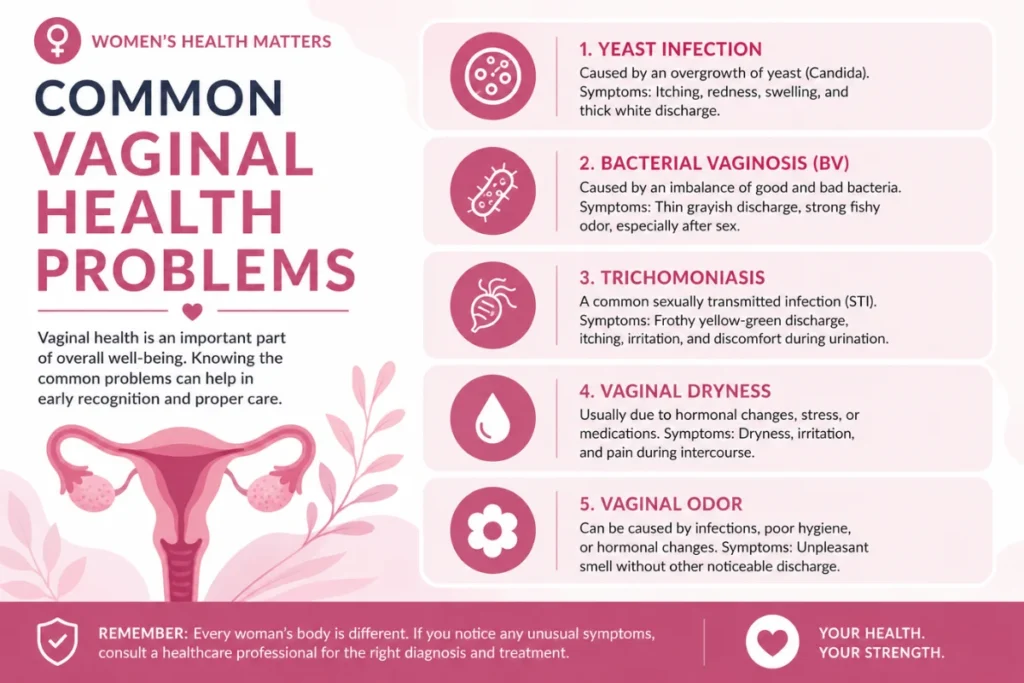
Several conditions can affect vaginal health. Some are mild and easily treated, while others require more detailed evaluation.
Yeast Infections
Yeast infections are among the most common causes of vaginal discomfort.
They occur when there is an overgrowth of naturally occurring yeast within the vagina.
Common symptoms include:
- Intense itching
- Redness and irritation
- Burning sensation
- Thick white discharge
- Discomfort during intercourse
Although yeast infections are common, recurrent infections may require further assessment to identify underlying triggers.
Bacterial Vaginosis
Another common condition is bacterial vaginosis (BV).
BV occurs when the natural balance of vaginal bacteria becomes disrupted.
Symptoms may include:
- Thin grey or white discharge
- Fishy odor
- Increased discharge
- Mild irritation
Many women mistake BV for a yeast infection, but the treatments are different.
This is why obtaining the correct diagnosis is essential.
Vaginal Dryness
Vaginal dryness can affect women of all ages, although it becomes more common around menopause.
Possible causes include:
- Hormonal changes
- Breastfeeding
- Certain medications
- Stress
- Perimenopause
- Menopause
Symptoms may include:
- Dryness
- Burning
- Irritation
- Pain during intercourse
Fortunately, several effective treatment options are available depending on the underlying cause.
Vaginal Irritation and Allergic Reactions
Sometimes symptoms are not caused by infection at all.
Certain products may trigger irritation, including:
- Scented soaps
- Intimate washes
- Bubble baths
- Perfumed sanitary products
- Detergents
- Fabric softeners
The vaginal area is sensitive, and harsh products can disrupt its natural protective environment.
Understanding Bacterial Vaginosis and Yeast Infection Treatment
Many women search online for bacterial vaginosis yeast infection treatment, assuming the two conditions are identical.
However, they are very different conditions.
Yeast Infection Treatment
Treatment often involves:
- Antifungal medications
- Vaginal antifungal treatments
- Oral medications when indicated
Bacterial Vaginosis Treatment
Treatment generally involves:
- Prescription antibiotics
- Restoring vaginal bacterial balance
- Addressing contributing factors
Because symptoms can overlap, self-diagnosis is not always reliable.
What appears to be a yeast infection may actually be bacterial vaginosis, and vice versa.
Professional evaluation helps ensure the right treatment is prescribed.
When Is Vaginal Discharge a Sign of a Problem?
Many women worry about discharge, but the key is recognizing when discharge differs from your normal pattern.
You should seek medical advice if discharge is associated with:
- Strong odor
- Itching
- Burning
- Pelvic pain
- Fever
- Bleeding between periods
- Pain during intercourse
Prompt evaluation allows appropriate vaginal discharge treatment and helps prevent complications.
Female Intimate Health Care: Everyday Habits That Matter

Good female intimate health care does not require complicated routines or expensive products.
In fact, many women are surprised to learn that simpler is often better.
Avoid Overwashing
The vagina is self-cleaning.
Excessive washing or douching can disrupt the natural balance of healthy bacteria.
Choose Gentle Products
Use mild, fragrance-free products around the intimate area whenever possible.
Wear Breathable Clothing
Cotton underwear and breathable fabrics help reduce moisture buildup and irritation.
Change Out of Wet Clothing Promptly
Remaining in wet swimsuits or sweaty workout clothes for prolonged periods may increase irritation.
Practice Safe Sexual Health
Safe sexual practices help reduce the risk of infections and support overall reproductive health.
Manage Chronic Health Conditions
Conditions such as diabetes can increase the risk of recurrent infections if not well controlled.
Can Hormones Affect Vaginal Health?
Absolutely.
Hormonal changes influence the vaginal environment throughout a woman’s life.
Changes commonly occur during:
- Puberty
- Pregnancy
- Breastfeeding
- Perimenopause
- Menopause
These hormonal fluctuations can affect:
- Vaginal moisture
- pH balance
- Discharge patterns
- Infection susceptibility
This is why symptoms often vary at different stages of life.
When Should You See a Gynaecologist?
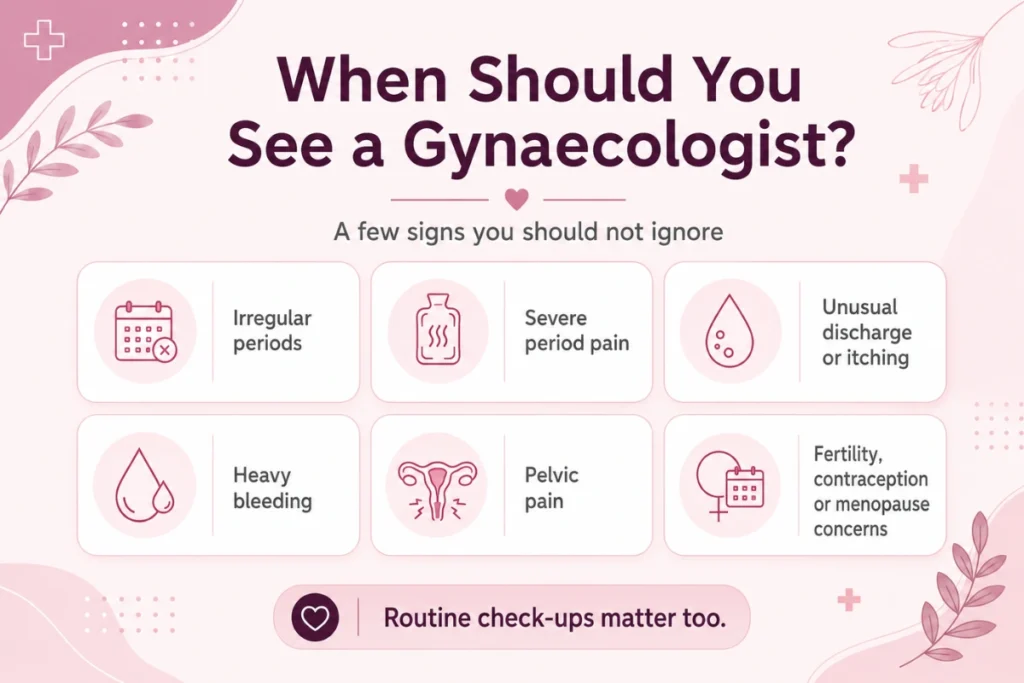
You should schedule an evaluation if you experience:
- Recurrent infections
- Persistent itching
- Unusual discharge
- Pelvic pain
- Vaginal odor that does not improve
- Pain during intercourse
- Postmenopausal bleeding
- Persistent irritation despite treatment
Many vaginal conditions are easily treated when diagnosed early.
Ignoring symptoms can sometimes lead to prolonged discomfort and unnecessary stress.
The Importance of Accurate Diagnosis
One of the biggest mistakes women make is repeatedly treating themselves based on internet searches or previous experiences.
While symptoms may seem familiar, different conditions often present in very similar ways.
A proper examination can help identify whether symptoms are related to:
- Yeast infection
- Bacterial vaginosis
- Hormonal changes
- Cervical conditions
- Skin disorders
- Sexually transmitted infections
- Other gynaecological concerns
Accurate diagnosis leads to faster relief and more effective treatment.
Choosing the Right Gynaecologist for Women’s Health Concerns
Vaginal health concerns can feel personal and sometimes uncomfortable to discuss.
Having a trusted specialist who listens carefully and creates a comfortable environment can make a significant difference.
If you are searching for the best female gynecologist in Dubai, choose a specialist who offers comprehensive women’s healthcare, evidence-based treatment, and a personalized approach to diagnosis and management.
Final Thoughts
Vaginal health is an essential part of overall health and deserves the same attention as any other aspect of well-being.
While occasional changes may be normal, persistent symptoms such as abnormal discharge, itching, irritation, odor, or discomfort should not be ignored.
Many common vaginal conditions are highly treatable, especially when diagnosed early.
Understanding your body’s normal patterns and seeking timely medical advice when something changes can help prevent unnecessary discomfort and support long-term reproductive health.
Dr Neha Lalla provides comprehensive care for women’s health concerns, including vaginal infections, abnormal discharge, hormonal changes, reproductive health, fertility care, and minimally invasive gynaecological treatments. Her patient-centred approach focuses on accurate diagnosis, personalized treatment plans, and helping women feel informed and confident about their health.
If you are experiencing persistent vaginal symptoms or have concerns about your intimate health, schedule a consultation to receive expert evaluation and individualized care.