
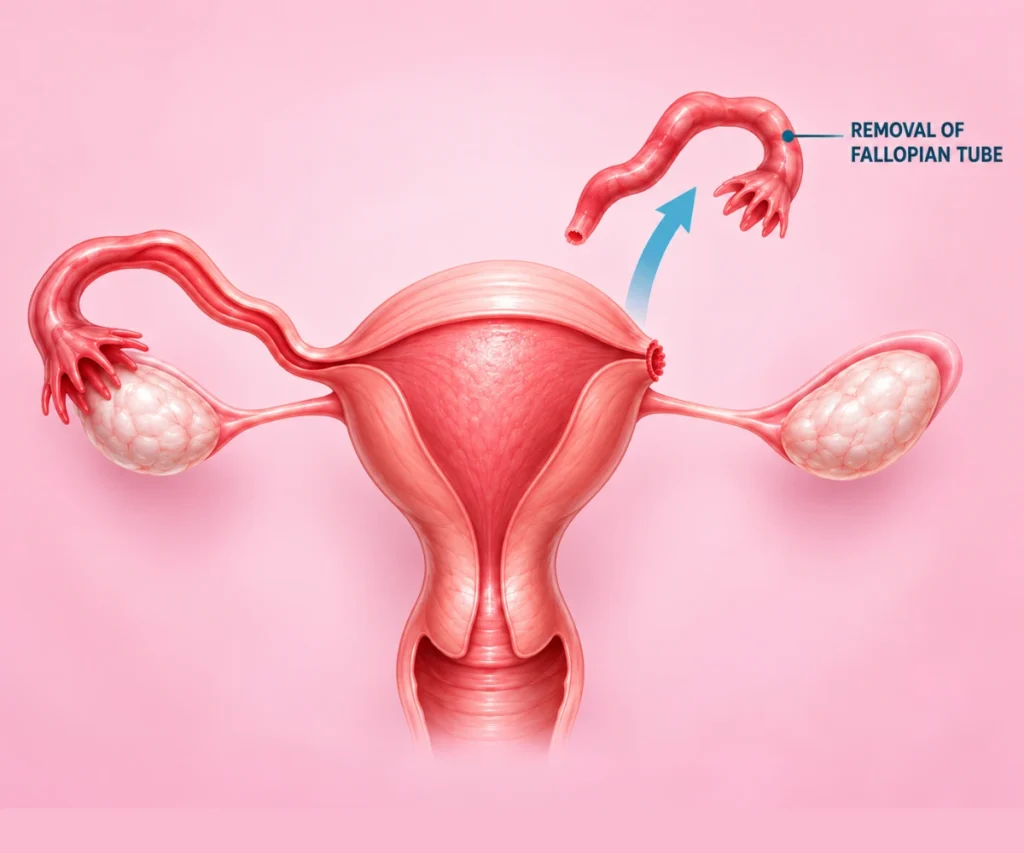
A salpingectomy is surgery to remove one or both fallopian tubes. It may be recommended for an ectopic pregnancy, a severely damaged or blocked fallopian tube, certain infections or gynecological conditions, and in selected situations as part of cancer-risk reduction or permanent contraception.
For a woman who has been advised to consider a salpingectomy in Dubai, the most important questions are usually practical ones: Why does the tube need to be removed? Will one or both tubes be affected? Can the surgery be performed laparoscopically? How long does recovery take? And what will the procedure mean for future fertility?
The answer depends largely on why the salpingectomy is being performed.
Removing one diseased fallopian tube because of an ectopic pregnancy has very different fertility implications from removing both tubes. Similarly, a salpingectomy performed to treat tubal disease is different from bilateral salpingectomy performed specifically for permanent sterilisation.
What is a Salpingectomy?
A salpingectomy is a surgical procedure in which one or both fallopian tubes are removed.
The fallopian tubes are two narrow structures that extend from the uterus towards the ovaries. After ovulation, an egg is usually picked up by a fallopian tube. Fertilisation normally occurs within the tube before the fertilised egg travels towards the uterus.
There are two main types of salpingectomy:
- Unilateral salpingectomy means removal of one fallopian tube.
- Bilateral salpingectomy means removal of both fallopian tubes.
The ovaries are not routinely removed during salpingectomy. This is important because the ovaries are responsible for producing the main reproductive hormones.
The Cleveland Clinic guide to salpingectomy explains that the procedure may be performed for conditions including ectopic pregnancy, damaged or blocked fallopian tubes, infection, tubal endometriosis, cancer and selected permanent contraception.
Why is a Salpingectomy Performed?
There is no single reason for fallopian tube removal. The indication can vary considerably between patients.
1. Ectopic Pregnancy
An ectopic pregnancy occurs when a pregnancy develops outside the uterine cavity, most commonly within a fallopian tube.
Depending on the size and location of the ectopic pregnancy, pregnancy hormone levels, symptoms and the patient’s clinical condition, treatment may involve monitoring, medication or surgery.
When surgery is needed and the affected tube is significantly damaged, bleeding or ruptured, a salpingectomy may be performed to remove the affected tube and pregnancy.
Surgery commonly involves removing the pregnancy together with the affected fallopian tube, particularly when the other tube appears healthy.
A salpingectomy performed for ectopic pregnancy is treatment for a medical condition. It should not be confused with salpingectomy performed specifically for permanent contraception.
2. Damaged or Blocked Fallopian Tube
A fallopian tube can become severely damaged following pelvic infection, inflammation, endometriosis, previous surgery or other conditions.
When the tube is badly damaged and is unlikely to function normally, removal may sometimes be recommended.
The decision depends on symptoms, reproductive plans and whether the other fallopian tube is healthy.
3. Hydrosalpinx
A hydrosalpinx occurs when a fallopian tube becomes blocked and fills with fluid.
It may affect fertility and can also influence the outcome of IVF treatment.
In some women undergoing fertility treatment, removal or treatment of a significant hydrosalpinx may be recommended before IVF.
The appropriate management depends on the condition of the tube, fertility plans and other reproductive factors.
4. Tubal Infection or Inflammation
Severe or persistent tubal disease may occasionally damage the fallopian tube to the point that surgical removal is necessary.
This decision is based on the extent of disease and whether preserving the tube is likely to be beneficial.
5. Cancer Treatment or Prevention
Salpingectomy may form part of surgery for certain fallopian tube, ovarian or uterine cancers.
It may also be discussed as a preventive measure in selected situations because research has shown that some high-grade serous cancers previously thought to originate primarily in the ovaries may begin in the fallopian tubes.
This has led to increased use of opportunistic salpingectomy during other appropriate pelvic surgery.
The American College of Obstetricians and Gynecologists guidance on opportunistic salpingectomy discusses this approach in women already undergoing pelvic surgery.
What is a Laparoscopic Salpingectomy?
A laparoscopic salpingectomy is removal of a fallopian tube using keyhole surgery. The procedure is usually performed under general anaesthesia.
A small incision is made in the abdomen for a laparoscope, which is a thin instrument containing a camera. Additional small incisions allow the surgeon to introduce surgical instruments.
Carbon dioxide gas is usually introduced into the abdomen to create enough space to see the pelvic organs clearly.
The surgeon identifies the fallopian tube, separates it carefully from surrounding structures and removes it. The incisions are then closed with sutures, surgical glue or another appropriate method.
When is Open Salpingectomy Needed?
Not every salpingectomy can be completed laparoscopically. An open salpingectomy, or laparotomy, involves a larger abdominal incision.
It may be necessary in an emergency, where there is significant internal bleeding, when extensive adhesions are present or when the patient’s clinical condition makes open surgery more appropriate.
For example, a ruptured ectopic pregnancy with significant bleeding may require urgent surgery.
The NHS notes that if a fallopian tube has already ruptured because of ectopic pregnancy, emergency surgery may be necessary, sometimes using a larger abdominal incision.
Recovery following open surgery is usually longer than after uncomplicated laparoscopic surgery.
What Happens Before a Salpingectomy?
Preparation depends on whether surgery is planned or being performed as an emergency.
For planned surgery, your doctor will usually review your medical history, medications, previous abdominal or pelvic surgery, allergies and relevant investigations.
The reason for removing the fallopian tube should also be clearly explained.
If future fertility is important, the discussion should include whether one or both tubes will be removed and what condition the remaining tube is in.
Before surgery, patients should understand:
- why the procedure has been recommended
- whether one or both fallopian tubes will be removed
- whether laparoscopy or open surgery is planned
- possible alternatives
- expected risks
- implications for fertility
- expected recovery
- whether another procedure is being performed at the same time
For Dr. Neha, informed consent means more than simply agreeing to an operation. A patient should understand what structure is being removed and what that means afterward.
What are the Benefits of Salpingectomy?
The benefits depend entirely on why the procedure is being performed.
1. Treating an Ectopic Pregnancy
When a tubal ectopic pregnancy requires surgery, removing a damaged or ruptured fallopian tube can treat the pregnancy and control bleeding.
2. Removing a Severely Damaged Tube
A badly damaged or diseased tube may cause symptoms, contribute to fertility problems or create other clinical concerns.
Removing the affected tube can address the underlying problem when preservation is unlikely to be beneficial.
3. Treating Hydrosalpinx before Fertility Treatment
In selected patients, treatment of hydrosalpinx may form part of fertility planning before IVF.
4. Potential Ovarian Cancer Risk Reduction
Opportunistic salpingectomy may reduce the future risk of certain epithelial ovarian cancers. However, it does not eliminate ovarian cancer risk.
This benefit should therefore be explained accurately rather than presented as cancer prevention guaranteed by surgery.
What are the Risks of Salpingectomy?
Salpingectomy is surgery and carries potential complications.
Possible risks include:
- bleeding
- infection
- blood clots
- reaction to anaesthesia
- injury to nearby organs or tissues
- need to convert laparoscopic surgery to open surgery in some situations
It includes bleeding, infection, blood clots, anaesthetic reactions and damage to surrounding organs among recognised salpingectomy risks. The individual risk is not the same for every patient.
Emergency surgery, previous Caesarean sections, previous pelvic operations, scar tissue, obesity, other medical conditions and the reason for surgery can all affect surgical complexity.
This is why risk discussions should be personalised rather than reduced to a generic list.
Does Salpingectomy Affect Hormones?
Salpingectomy does not normally stop ovarian hormone production because the ovaries remain in place. The fallopian tubes do not produce the main hormones responsible for the menstrual cycle.
ACOG states that ovarian function does not appear to be adversely affected by salpingectomy performed at the time of hysterectomy, based on available surrogate markers of ovarian function and IVF response. Available evidence is reassuring, although long-term ovarian reserve continues to be an area of research.
It is therefore more accurate to say that ovarian function does not appear to be significantly affected based on current evidence rather than making an absolute claim.
Does Salpingectomy Cause Menopause?
Salpingectomy alone does not normally cause surgical menopause. Menopause occurs because ovarian function declines. A salpingectomy removes the fallopian tube, not the ovary.
Patients should distinguish between several similar surgical terms:
- Salpingectomy – removal of a fallopian tube.
- Oophorectomy – removal of an ovary.
- Salpingo-oophorectomy – removal of a fallopian tube and ovary.
- Hysterectomy – removal of the uterus.
If both ovaries are removed before natural menopause, hormonal consequences are very different from those associated with removal of the fallopian tubes alone.
Will I Still have Periods After Salpingectomy?
Yes, periods usually continue if the uterus and ovaries remain in place.
The ovaries continue producing reproductive hormones and the uterine lining can continue responding to those hormones. Removing the fallopian tubes does not itself stop menstruation.
If menstrual bleeding changes significantly following surgery, other causes may need assessment rather than assuming the salpingectomy itself is responsible.
Can I Become Pregnant After One Fallopian Tube is Removed?
Yes. Natural pregnancy may still be possible after unilateral salpingectomy if the remaining fallopian tube is healthy. A woman does not necessarily become infertile because one fallopian tube has been removed.
However, fertility depends on several other factors including:
- age
- ovarian reserve
- ovulation
- condition of the remaining tube
- sperm quality
- previous pelvic infection
- endometriosis
- previous ectopic pregnancy
- other fertility conditions
If one tube has been removed because of ectopic pregnancy, the underlying reason for the ectopic pregnancy may also influence future reproductive planning. Specialist notes that removal of the affected tube during ectopic pregnancy surgery is not generally thought to reduce future pregnancy chances when the other tube is healthy.
Can I Become Pregnant After Bilateral Salpingectomy?
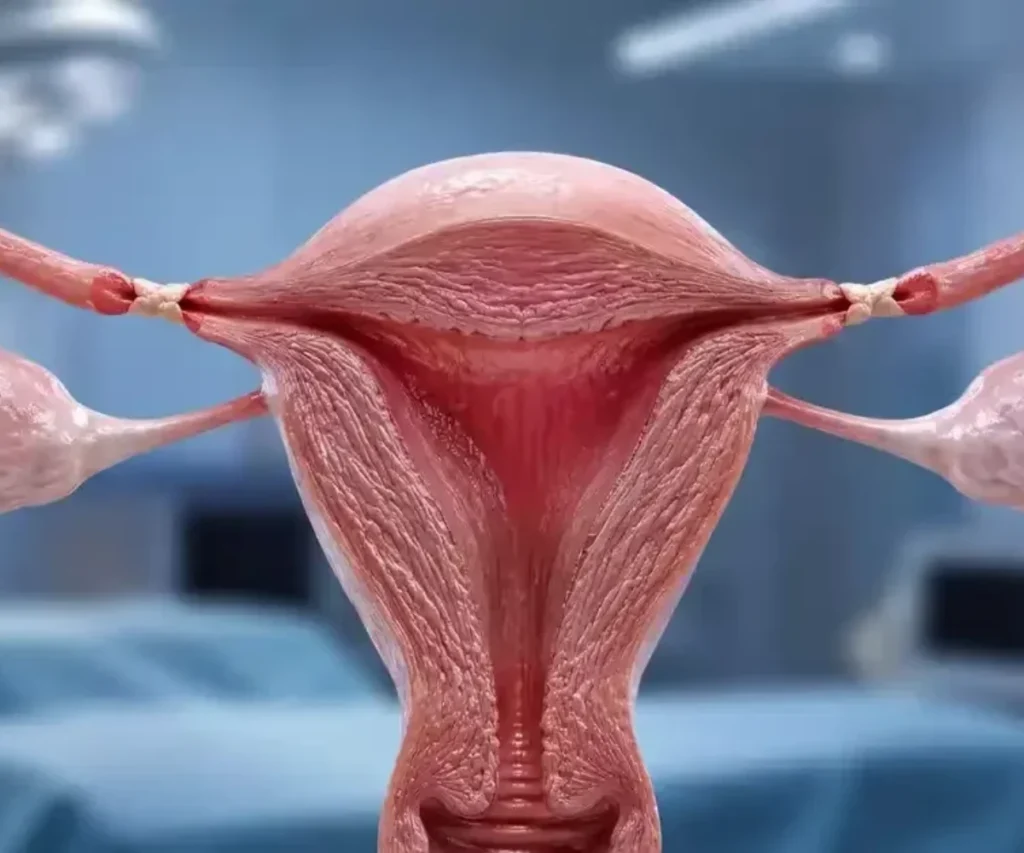
After complete bilateral salpingectomy, natural conception is not expected because both fallopian tubes have been removed.
There is no tubal pathway through which sperm and egg can meet naturally. However, if the ovaries and uterus remain suitable, pregnancy through in vitro fertilisation (IVF) may still be possible.
IVF bypasses the fallopian tubes by retrieving eggs from the ovaries, fertilising them in a laboratory and transferring an embryo to the uterus.
This is an important distinction. It would be inaccurate to say that fertility is unaffected after bilateral salpingectomy. Natural fertility is fundamentally changed because both tubes are absent.
Is Bilateral Salpingectomy Permanent?
Yes. Once both fallopian tubes have been completely removed, they cannot be reconnected through a conventional tubal reversal procedure.
This is different from some forms of tubal ligation, where portions of the tubes remain and microsurgical reversal may sometimes be considered. Salpingectomy eliminates tubal reversal as an option.
For this reason, bilateral salpingectomy performed for permanent contraception requires careful consideration of future reproductive plans.
What is the Difference Between Salpingectomy and Tubal Ligation?
Both procedures involve the fallopian tubes, but they are not identical.
Tubal ligation interrupts the fallopian tubes by blocking, sealing, dividing or partly removing them. Tubal ligation is primarily performed as permanent contraception.
Salpingectomy removes a fallopian tube completely. Salpingectomy may be performed for ectopic pregnancy, significant tubal disease, hydrosalpinx, cancer-related reasons or, in some healthcare systems, permanent contraception.
The correct procedure depends on the reason treatment is needed rather than assuming one operation is universally better.
What is the Recovery Time After Salpingectomy?
Recovery depends primarily on whether the operation was laparoscopic or open and whether additional surgery was performed.
Recovery after laparoscopic salpingectomy
Experts states that most people require several days of recovery after laparoscopic salpingectomy and may take up to approximately 14 days to resume their usual day-to-day lifestyle.
Some abdominal discomfort, fatigue and incision soreness can occur during the first few days.
Patients should follow their own surgeon’s instructions regarding driving, exercise, work, lifting and sexual activity.
Recovery after open salpingectomy
Recovery following open abdominal surgery is longer. Recovery may last up to approximately six weeks after an open salpingectomy.
The exact timeline depends on the operation, reason for surgery and individual recovery. Emergency surgery for ectopic pregnancy may also involve recovery from blood loss and pregnancy loss, not only the surgical incision.
When Should you Contact your Doctor After Salpingectomy?
Your surgical team should provide specific postoperative instructions.
Medical advice should be sought if you develop symptoms such as:
- increasing or severe abdominal pain
- fever or chills
- redness, swelling or discharge around the incision
- heavy vaginal bleeding
- persistent vomiting
- painful urination
- swelling or pain in a leg
- shortness of breath
- feeling significantly unwell
Salpingectomy in Dubai: What Should Patients Know?
For patients considering a salpingectomy in Dubai, the reason for surgery is particularly important.
Salpingectomy performed because of ectopic pregnancy, tubal damage, infection or another medical condition is treatment for an underlying health problem.
A bilateral salpingectomy performed specifically for permanent sterilisation is a different situation.
UAE medical law contains specific provisions concerning female sterilisation.
Article 15 of the Federal Decree-Law on Medical Liability states that no intervention may be performed for the purpose of sterilising a woman unless a specialised medical committee comprising at least three physicians determines that pregnancy or delivery would pose a definite risk to the mother’s life. The provision also requires the woman’s written approval and states that the husband must be informed.
This means bilateral salpingectomy in Dubai should not be promoted as a routine elective sterilisation procedure simply because a woman has completed her family.
The medical indication and current requirements need to be reviewed by the treating team and healthcare facility.
It is equally important not to confuse those requirements with medically necessary removal of a fallopian tube for ectopic pregnancy or another pathological condition.
Frequently Asked Questions On Salpingectomy
1. Is salpingectomy major surgery?
Salpingectomy is an operation requiring anaesthesia. Many procedures can be completed laparoscopically using small incisions, but the complexity depends on the reason for surgery and the patient’s individual circumstances.
2. Is salpingectomy painful?
Some abdominal and incision discomfort is expected after surgery. Pain is usually managed with medication recommended by the treating team. Severe or worsening pain requires medical assessment.
3. How long does laparoscopic salpingectomy recovery take?
Many patients need several days of rest and may gradually resume usual daily activities within approximately two weeks following uncomplicated laparoscopic surgery. Individual recovery varies.
4. Can I become pregnant naturally after both tubes are removed?
Natural conception is not expected after complete bilateral salpingectomy. IVF may remain possible when the ovaries and uterus are suitable.
5. Does salpingectomy cause early menopause?
Salpingectomy alone does not normally cause surgical menopause because the ovaries are not removed.
6. Can salpingectomy be reversed?
A completely removed fallopian tube cannot simply be reconnected. Complete bilateral salpingectomy should therefore be viewed as permanent.
7. Is salpingectomy always necessary for ectopic pregnancy?
No. Ectopic pregnancy treatment can include monitoring, medication or surgery depending on symptoms, pregnancy findings, hormone levels and clinical stability.
8. Is salpingectomy the same as removing the ovaries?
No. Salpingectomy removes the fallopian tubes. Oophorectomy removes the ovaries.
9. Is salpingectomy safe?
Salpingectomy is an established surgical procedure, but no operation is risk-free. The risks depend on the reason for surgery, surgical approach, previous operations and individual health.
Salpingectomy in Dubai: Which Treatment and Fertility Options are Suitable for You?
Salpingectomy is not one operation performed for one reason.
For some women, it is emergency treatment for a ruptured ectopic pregnancy. For others, it is planned treatment for a severely damaged tube or hydrosalpinx. In selected patients already undergoing pelvic surgery, fallopian tube removal may also be discussed because of its potential role in reducing future ovarian cancer risk.
What matters most is why surgery has been recommended and whether one or both fallopian tubes need to be removed.
A unilateral salpingectomy does not automatically mean that natural pregnancy is no longer possible. A healthy remaining tube may still allow conception.
Complete bilateral salpingectomy is different. Natural conception is not expected afterward, although IVF may remain an option when the ovaries and uterus are functional.
For women considering salpingectomy in Dubai, the reason for surgery also determines whether UAE requirements concerning permanent sterilisation are relevant.
As a Consultant Obstetrician & Gynaecologist in Dubai, Dr. Neha Lalla considers the procedure within the patient’s complete reproductive and surgical history. Previous pregnancies, ectopic pregnancy, Caesarean sections, pelvic infections, previous surgery, tubal disease and future fertility plans can all influence the recommendation.
Before proceeding with salpingectomy, you should understand which tube is being removed, why removal is recommended, whether there are alternatives, what recovery involves and what the procedure means for future pregnancy.
An individual consultation allows these questions to be discussed in the context of your own diagnosis rather than relying on general surgical information alone.
Medical Disclaimer
This article provides general educational information and does not replace individual medical advice, diagnosis or treatment. The need for salpingectomy, surgical approach, fertility implications and applicable UAE requirements depend on the patient’s diagnosis and individual clinical circumstances.