
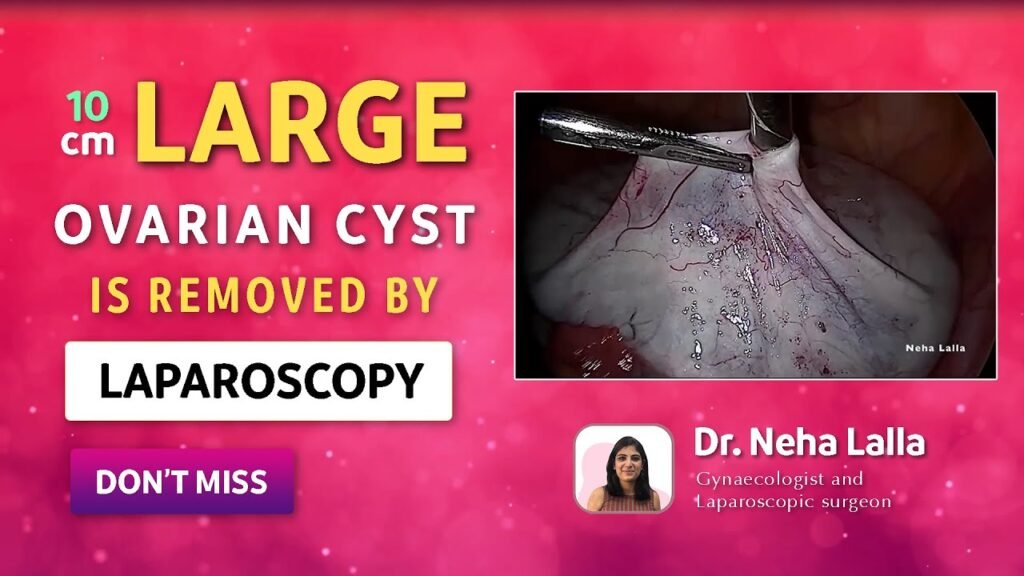
Ovarian cysts are common fluid-filled sacs or growths that develop in or on an ovary. Many ovarian cysts cause no symptoms and disappear on their own without treatment. However, some cysts can cause pelvic pain, bloating, changes in periods or other symptoms and may require monitoring or treatment.
Understanding the symptoms, causes, types and treatment of ovarian cysts can help you know when medical evaluation may be needed.
If an ovarian cyst is found during an ultrasound, the next step depends on factors such as its size, appearance, symptoms, age and whether you have gone through menopause.
Watch: Ovarian Cyst Symptoms, Causes & Treatment
In this video, Dr. Neha Lalla explains common ovarian cyst symptoms, causes, treatment options and when medical evaluation may be recommended.
What is an Ovarian Cyst?
An ovarian cyst is a sac or pouch that forms in or on an ovary. It may contain fluid, blood, tissue or other material. Ovarian cysts are common, particularly during the reproductive years. Many are benign and resolve naturally without treatment.
Some cysts are related to the normal menstrual cycle, while others develop because of conditions such as endometriosis.
What are the different types of Ovarian Cysts?
There are several types of ovarian cysts:
1. Functional Ovarian Cysts
Functional cysts are associated with the menstrual cycle and are among the most common ovarian cysts. They often disappear on their own within a few weeks or months.
2. Corpus Luteum Cysts
After ovulation, the follicle that released the egg normally develops into the corpus luteum. Sometimes fluid or blood collects within it, forming a corpus luteum cyst.
3. Endometriomas
An endometrioma is an ovarian cyst associated with endometriosis. These cysts may cause pelvic pain and painful periods and can sometimes be associated with fertility problems.
👉🏻 Could Endometriosis Be Affecting Your Fertility? Learn When Endometriosis Surgery May Be Recommended.
4. Dermoid Cysts
Dermoid cysts develop from cells that can form different types of body tissue. They are generally benign but may grow and sometimes require treatment.
5. Cystadenomas
Cystadenomas develop from cells on the outer surface of the ovary. They are usually benign but can sometimes become large.
What are the symptoms of an Ovarian Cyst?
Many ovarian cysts do not cause any symptoms and may only be discovered during a routine examination or ultrasound.
When symptoms occur, they can include:
- Pelvic or lower abdominal pain
- A dull ache or pressure in the abdomen
- Bloating or abdominal swelling
- Pain during sexual intercourse
- Heavy, irregular or lighter-than-usual periods
- A feeling of fullness after eating
- Frequent urination
- Difficulty emptying the bladder or bowel
- Nausea or vomiting in some cases
Symptoms can vary depending on the size, type and location of the cyst.
What causes Ovarian Cysts?
Ovarian cysts can develop for several reasons.
Common causes include:
- Normal changes during ovulation
- Hormonal factors
- Endometriosis
- Pregnancy
- Certain fertility treatments
- Previous pelvic infections
- Abnormal growth of ovarian cells
Functional ovarian cysts commonly develop as part of the menstrual cycle and often resolve without treatment.
How Are Ovarian Cysts Diagnosed?
If your doctor suspects an ovarian cyst, an evaluation may include:
1. Pelvic Examination
A pelvic examination may help identify tenderness or an enlarged area, although imaging is generally needed to properly evaluate an ovarian cyst.
2. Ultrasound
Pelvic ultrasound is one of the main tests used to evaluate ovarian cysts.
It can help determine:
- The size of the cyst
- Its location
- Whether it appears fluid-filled, solid or mixed
- Whether its appearance is simple or complex
A transvaginal ultrasound may be used when appropriate.
3. Blood Tests
Depending on your age, symptoms and ultrasound findings, your doctor may recommend blood tests such as CA-125.
Importantly, an elevated CA-125 does not automatically mean ovarian cancer, as levels can also rise with several benign conditions.
4. Pregnancy Test
A pregnancy test may be recommended in women of reproductive age because some ovarian cysts can occur during early pregnancy and because pregnancy-related conditions may need to be considered when evaluating pelvic pain.
Does Every Ovarian Cyst Need Treatment?
No. Many ovarian cysts disappear naturally and do not require surgery or other treatment.
Whether treatment is needed depends on factors such as:
- The type of cyst
- Its size
- Its ultrasound appearance
- Whether it is growing
- Whether you have symptoms
- Your age
- Whether you have gone through menopause
- Your fertility plans
- Whether there is concern about cancer
Watchful waiting with follow-up ultrasound may be appropriate for some cysts.
Ovarian Cyst Treatment Options
Treatment depends on the individual situation.
1. Monitoring or Watchful Waiting
If the cyst is small, appears benign and is not causing significant symptoms, your doctor may recommend monitoring it rather than treating it immediately.
A follow-up ultrasound may be used to see whether the cyst changes or disappears. Many functional cysts resolve naturally over one or two menstrual cycles.
2. Medication
Medication may sometimes be used to manage symptoms or reduce the likelihood of developing additional functional cysts. However, hormonal contraceptives generally do not shrink an existing ovarian cyst.
3. Surgery for an Ovarian Cyst
Surgery may be considered when an ovarian cyst:
- Is large
- Continues to grow
- Persists over time
- Causes significant symptoms
- Has a complex or concerning appearance
- Is associated with complications
- Raises concern about cancer
The decision should be based on your individual clinical and imaging findings.
What is Ovarian Cystectomy?
Ovarian cystectomy is a surgical procedure used to remove an ovarian cyst while aiming to preserve healthy ovarian tissue when appropriate.
For women who wish to become pregnant in the future, preservation of ovarian tissue and fertility may be an important consideration when planning surgery.
Your surgeon will determine whether cystectomy is appropriate based on the type of cyst, its size and appearance, your symptoms and your reproductive plans.
Laparoscopic Ovarian Cyst Removal
When an ovarian cyst appears suitable for minimally invasive surgery, laparoscopy may be used.
Laparoscopic surgery involves small abdominal incisions through which a camera and surgical instruments are inserted.
Compared with open surgery, minimally invasive surgery generally involves smaller incisions and may allow a shorter recovery, although the appropriate surgical approach depends on the size and characteristics of the cyst and the clinical situation.
When should an Ovarian Cyst be removed?
An ovarian cyst may need surgical treatment when it is:
- Large or continuing to grow
- Persistent rather than resolving naturally
- Causing significant pain or other symptoms
- Complex or concerning on ultrasound
- Associated with complications
- Suspicious for malignancy
Surgery is not automatically required simply because an ovarian cyst has been found. The decision depends on the clinical and imaging findings.
Can Ovarian Cysts Cause Infertility?
Most ovarian cysts do not directly prevent pregnancy.
However, some conditions associated with ovarian cysts can affect fertility. For example, endometriomas are associated with endometriosis, which can affect fertility. PCOS can also affect ovulation and fertility, although the small follicles seen in PCOS are not the same thing as typical ovarian cysts.
If you are trying to conceive and have been diagnosed with an ovarian cyst, your doctor can assess whether the cyst or its underlying cause may be affecting your fertility.
Can an Ovarian Cyst Become Cancerous?
Most ovarian cysts are benign, particularly in women before menopause.
However, some ovarian masses can be malignant, and the risk of ovarian cancer increases with age, particularly after menopause. The ultrasound appearance, symptoms, age and other clinical factors help doctors assess whether further investigation is required.
A complex or suspicious ovarian mass should be evaluated by an appropriate specialist.
When Is an Ovarian Cyst an Emergency?
Seek urgent medical attention if you experience:
- Sudden and severe pelvic or abdominal pain
- Severe pain accompanied by nausea or vomiting
- Faintness, dizziness or weakness
- Fever with significant abdominal or pelvic pain
- Symptoms suggesting a ruptured cyst or ovarian torsion
An ovarian cyst can sometimes rupture or cause the ovary to twist, which can require urgent medical assessment.
Ovarian Cysts During Pregnancy
Ovarian cysts can sometimes be found during pregnancy.
Many are benign and can be monitored with ultrasound. If a cyst is large, complex, persistent or causing symptoms, your obstetrician may recommend additional monitoring or treatment depending on the circumstances.
Any ovarian cyst discovered during pregnancy should be assessed by your treating doctor rather than assumed to be harmless.
When Should You See a Gynaecologist?
You should consider a medical evaluation if you have:
- Persistent pelvic or abdominal pain
- Repeated changes in your menstrual cycle
- Abdominal swelling or persistent bloating
- Pain during intercourse
- An ovarian cyst identified on an ultrasound
- Fertility concerns
- Sudden or severe pelvic pain
An ultrasound and clinical assessment can help determine whether the cyst needs monitoring, further investigation or treatment.
Conclusion
Ovarian cysts are common and many resolve without treatment. However, some cysts can cause symptoms, persist over time or require surgical management.
The appropriate approach depends on the type, size and appearance of the cyst, your symptoms, age, menopausal status and fertility plans.
If surgery is recommended, ovarian cystectomy and laparoscopic surgery may be options in appropriately selected patients, with the goal of treating the cyst while preserving healthy ovarian tissue whenever possible.
If you have been diagnosed with an ovarian cyst in Dubai and are unsure whether you need treatment, consult a gynaecologist for an individualized assessment.
👉🏻 Have an ovarian cyst and wondering what to do next? Book a consultation with Dr. Neha Lalla now.
Whatsapp:+971 50 307 3225
Visit: Burjuman Mall, Prime Medical Centre – Khalid Bin Al Waleed Rd – Al Mankhool – Dubai – UAE or Prime Hospital – Casablanca St – Al Garhoud – Dubai – UAE
Frequently Asked Questions About Ovarian Cysts
1. What are the most common symptoms of an ovarian cyst?
Many ovarian cysts cause no symptoms. When symptoms occur, they may include pelvic pain, bloating, abdominal pressure, painful intercourse, changes in periods or urinary/bowel symptoms.
2. Can an ovarian cyst go away on its own?
Yes. Many functional ovarian cysts disappear naturally within a few weeks or months without treatment.
3. How do I know if an ovarian cyst needs surgery?
Surgery may be considered when a cyst is large, persistent, symptomatic, complex or concerning for malignancy. The decision is based on ultrasound findings, symptoms, age and other individual factors.
4. Is laparoscopic surgery safe for ovarian cysts?
Laparoscopy is a commonly used minimally invasive approach for suitable ovarian cysts. Whether it is appropriate depends on the size and characteristics of the cyst and the patient’s individual circumstances.
5. Can ovarian cysts affect fertility?
Most ovarian cysts do not significantly affect fertility. However, conditions such as endometriosis and PCOS can be associated with both ovarian cysts or cyst-like ovarian changes and fertility difficulties.
6. Can ovarian cysts cause irregular periods?
Some ovarian cysts can be associated with changes in menstrual bleeding or cycle patterns. However, irregular periods can have many causes and should be assessed if persistent.
7. Can ovarian cysts cause pain during sex?
Yes. Some ovarian cysts can cause pain during sexual intercourse, particularly when the cyst is larger or associated with conditions such as endometriosis.
8. Can an ovarian cyst become cancerous?
Most ovarian cysts are benign, but some ovarian masses can be malignant. Risk assessment depends on factors including age and ultrasound appearance.