
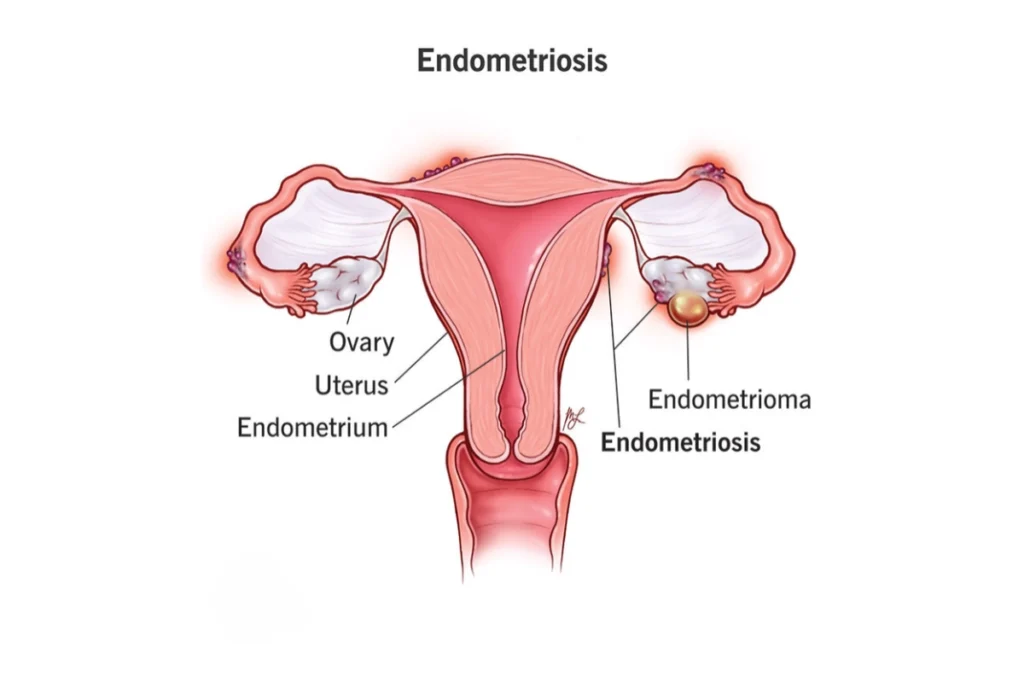
Endometriosis is a long-term condition involving tissue resembling the uterine lining outside the uterus. It can cause inflammation, pelvic pain and sometimes fertility problems. Its cause is not fully understood, and the condition can look very different from one patient to another.
What Is Endometriosis?
Endometriosis involves tissue resembling the uterine lining growing outside the uterus. Like the normal lining inside the womb, this tissue responds to monthly hormonal shifts thickening, breaking down, and bleeding with each menstrual cycle. Because this blood and tissue have no way to exit the body, it becomes trapped, triggering ongoing inflammation, irritation, and scar tissue (adhesions) that can cause pelvic organs to stick together. Lesions most commonly affect the pelvic lining, ovaries, and tissues around the bowel, bladder, or ureters.
What Causes Endometriosis?
There is no single proven cause of endometriosis. Researchers believe it develops through a combination of hormonal, genetic, and immune factors rather than one single trigger. The leading medical theories include:
- Retrograde Menstruation: During a period, some menstrual blood containing endometrial-like cells flows backward through the fallopian tubes into the pelvic cavity instead of leaving the body, where these cells can attach and grow.
- Cellular Transformation (Metaplasia): Hormones or immune signals may cause cells lining the pelvis and abdomen (peritoneal cells) or early embryonic cells to transform into tissue resembling the uterine lining.
- Immune System Factors: Changes in immune response may prevent the body from recognising and clearing misplaced endometrial-like cells, allowing lesions to implant and trigger inflammation.
- Hormonal Influence (Oestrogen): Oestrogen plays a key role in fuelling the growth, thickening, and inflammation of endometriosis lesions across the menstrual cycle.
- Genetic Susceptibility: Endometriosis often runs in families, suggesting inherited genetic traits can make some women more prone to developing the condition.
- Blood or Lymphatic Spread: In rarer cases, misplaced cells may travel to areas outside the pelvis through blood vessels or the lymphatic system.
- Surgical Scar Implantation: Endometrial cells can occasionally attach to a surgical incision site following pelvic procedures such as a C-section or hysterectomy.
No single theory explains every case, and endometriosis is never caused by poor hygiene, lifestyle choices, or a failure to manage stress.
Who Is More Likely to Develop Endometriosis? (Risk Factors)
While endometriosis can affect any woman during her reproductive years, certain factors are associated with a higher likelihood of developing the condition. Having one or more risk factors does not mean you will definitely develop endometriosis, nor does the absence of them rule it out:
- Family History: Having a close biological relative such as a mother, sister, or aunt with endometriosis increases your chances of developing it.
- Menstrual History: Starting your periods at an early age (early menarche), having shorter menstrual cycles (less than 27 days), or experiencing heavy menstrual bleeding that lasts more than seven days may raise your risk.
- Reproductive History: Never having given birth (nulliparity) is associated with a higher likelihood, as pregnancy temporarily pauses ovulation and menstruation.
- Pelvic Anatomy: Certain structural variations or medical conditions that obstruct the normal outflow of menstrual blood from the body can increase the risk of endometrial-like tissue implanting in the pelvis.
What Are The Main Types Of Endometriosis?
Endometriosis is generally grouped into three main types based on where the lesions grow and how deeply they affect pelvic tissues. More than one type can occur at the same time:
Superficial Peritoneal Endometriosis (SPE)
The most common form, where thin, flat lesions grow on the peritoneum (the thin membrane lining the inside of the pelvis and abdomen). Because these lesions sit on the surface, they often do not show up on routine ultrasound scans.
Ovarian Endometriomas (Chocolate Cysts)
Fluid-filled cysts that form deep within the ovaries. They are often called “chocolate cysts” because they contain dark, old menstrual blood. Endometriomas can sometimes affect ovarian tissue and fertility in women with endometriosis.
Deep Infiltrating Endometriosis (DIE)
A more complex form where endometrial-like tissue penetrates more than 5 mm beneath the pelvic lining. It can involve surrounding structures and organs such as the bowel, bladder, ureters, or the tissue between the vagina and rectum (rectovaginal septum). Less commonly, lesions can also develop in surgical scars or the abdominal wall.
What Are The Stages Of Endometriosis?
Alongside the types, specialists often describe endometriosis using the ASRM four-stage system (Stages I to IV). Staging is based on the location, extent, and depth of lesions as well as the presence of scar tissue (adhesions)—not how severe your pain feels:
- Stage I (Minimal): Small, scattered superficial implants with little or no scar tissue.
- Stage II (Mild): More numerous and slightly deeper implants with mild adhesions.
- Stage III (Moderate): Deeper implants, small ovarian endometriomas, and more noticeable adhesions.
- Stage IV (Severe): Widespread deep implants, larger ovarian cysts, and dense adhesions that may affect organs such as the bowel or bladder.
A person with Stage I endometriosis can experience severe, life-disrupting pain, while someone with Stage IV disease may have very few symptoms.
Can You Prevent Endometriosis?
There is currently no proven way to completely prevent endometriosis, because its exact causes are still not fully understood. However, certain medically supported habits and options may help lower oestrogen-driven stimulation and support earlier diagnosis:
- Hormonal Options (Under Medical Guidance): Doctors sometimes recommend hormonal methods such as combined oral contraceptive pills, patches, or progestin-based therapies to help regulate oestrogen levels, lighten menstrual bleeding, and slow the growth of endometrial-like tissue.
- Regular Physical Activity: Engaging in consistent exercise (around four or more hours a week) helps maintain a healthy body fat balance and can lower circulating oestrogen levels in the body.
- Limiting Alcohol and Caffeine: High intake of alcohol or caffeinated drinks may influence oestrogen balance, so keeping both in moderation is often advised as part of general reproductive health.
- Early Symptom Tracking: Paying attention to recurring period cramps, pelvic pain, or pain during intimacy and recognising common endometriosis symptoms early helps your gynaecologist evaluate the condition before severe complications develop.
While healthy lifestyle habits support overall wellbeing, they cannot cure or reliably stop endometriosis. Be cautious of overly restrictive diets or commercial supplements marketed as guaranteed treatments without solid clinical evidence.
Is It Always Progressive?
The course varies. Some symptoms remain stable, some worsen and others improve with treatment or changing hormonal circumstances. A diagnosis does not mean every patient will develop extensive deep disease. Follow-up should reflect symptoms, findings and individual goals.
Common Myths vs. Facts About Endometriosis
Misinformation often delays diagnosis and adds unnecessary guilt for women living with pelvic pain. Understanding the difference between common myths and clinical facts helps you make informed decisions about your care:
- Myth: Severe period pain is just normal and something women must tolerate.
Fact: Mild cramps can be normal, but pain that disrupts work, sleep, or daily life is not normal and deserves proper gynaecological evaluation. - Myth: Endometriosis is caused by stress, lifestyle habits, or poor hygiene.
Fact: Endometriosis is a complex medical condition linked to genetic, hormonal, and immune factors—it is never caused by personal habits or an inability to manage stress. - Myth: Pregnancy permanently cures endometriosis.
Fact: Hormonal changes during pregnancy may temporarily ease symptoms for some women, but pregnancy is not a cure, and symptoms often return afterward. - Myth: A normal ultrasound means you do not have endometriosis.
Fact: Standard ultrasounds can detect ovarian cysts (endometriomas) and some deep lesions, but superficial endometriosis frequently does not appear on routine scans. - Myth: Special diets or supplements can cure the condition.
Fact: Balanced nutrition supports overall wellbeing and may help manage inflammation, but restrictive diets or unproven supplements cannot cure endometriosis.
How Does Dr. Neha Lalla Approach Endometriosis Evaluation and Care?
Because endometriosis varies widely in its type, stage, and impact on daily life, Dr. Neha Lalla, Consultant Obstetrician & Gynaecologist in Dubai, takes an individualised, step-by-step approach to care. Rather than relying on scans alone, she evaluates your symptom history, pelvic anatomy, family background, and future fertility goals together. Whether managing superficial lesions with targeted medical therapy or planning organ-preserving laparoscopic care for ovarian endometriomas or deep infiltrating endometriosis, the focus is always on relieving pain, protecting reproductive health, and helping you make well-informed decisions.

Frequently Asked Questions On Endometriosis
1. Is endometriosis genetic?
Yes, genetics can play a role. Having a mother, sister, or close relative with endometriosis increases your likelihood of developing the condition, though women with no family history can also be affected.
2. Can ovarian endometriomas affect fertility?
Yes. Ovarian endometriomas (endometriosis-related cysts) can affect egg reserve, ovulation, or surrounding pelvic anatomy, making it harder for some women to conceive. Treatment decisions depend on cyst size, symptoms, and your reproductive plans.
3. Can you have more than one type of endometriosis at the same time?
Yes. A person can have superficial peritoneal lesions, ovarian endometriomas, and deep infiltrating endometriosis simultaneously, which is why symptom patterns and treatment needs vary widely from patient to patient.
4. Does endometriosis go away after menopause?
For many women, symptoms improve after menopause because oestrogen levels drop. However, endometriosis does not always disappear completely, and pelvic pain or scar-related symptoms can occasionally persist, especially if hormone replacement therapy is used.
5. Can a normal ultrasound rule out endometriosis?
No. While ultrasound or MRI can detect ovarian endometriomas and deep endometriosis, superficial lesions on the pelvic lining often do not show up on standard imaging. Diagnosis relies on your overall clinical picture, examination, and specialist assessment.
Conclusion
Understanding what endometriosis is along with its different types, stages, and risk factors is the first step toward getting the right medical support. While there is no single proven cause or guaranteed prevention, an accurate clinical evaluation can help clarify whether your symptoms are linked to superficial lesions, ovarian endometriomas, or deep disease. With a care plan tailored to your symptoms and reproductive goals, it is possible to manage discomfort effectively and protect your long-term wellbeing.
Take the Next Step Toward Clarity and Relief
If you suspect you may have endometriosis or want expert guidance on your symptoms in Dubai, book a consultation with Dr. Neha Lalla for a thorough evaluation and personalised treatment plan. You can also explore helpful women’s health resources on Dr. Neha Lalla’s official YouTube channel.
Medical Disclaimer
This article is educational and is not a substitute for individual diagnosis, medical advice or treatment. Clinical suitability depends on examination and appropriate investigations.