
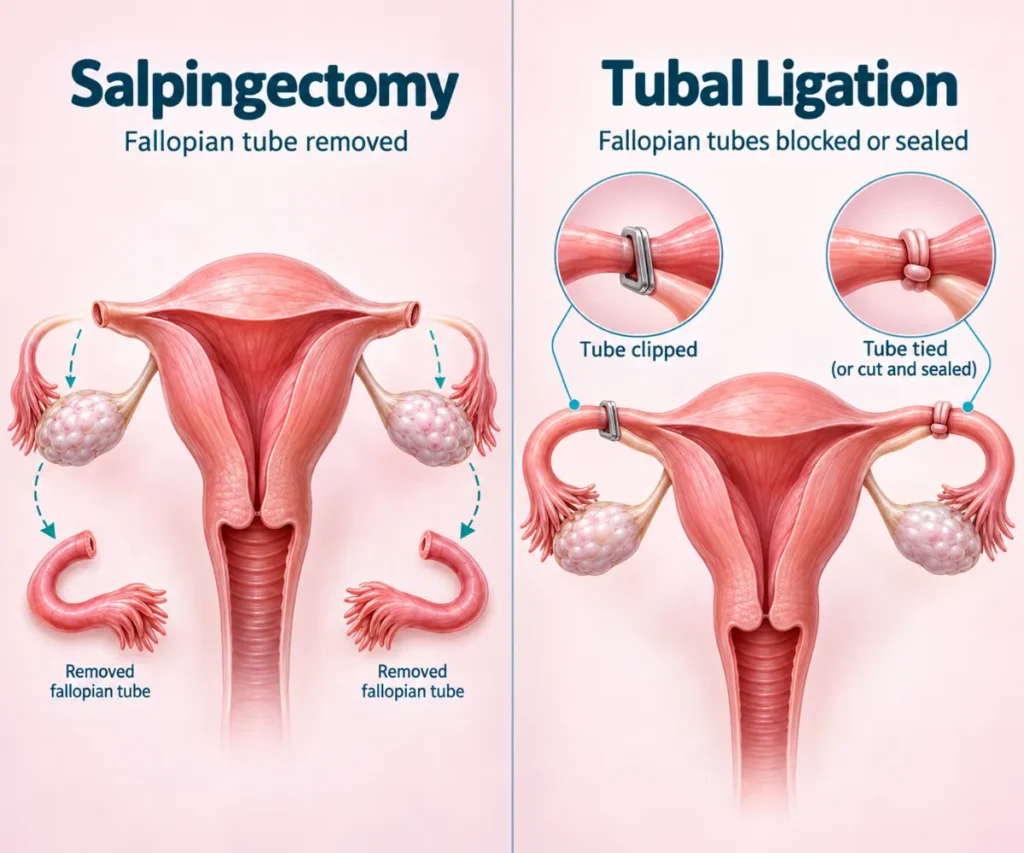
Salpingectomy and tubal ligation are two procedures involving the fallopian tubes, but they differ in how they are performed, why they may be recommended and what they mean for future fertility.
Salpingectomy involves removing one or both fallopian tubes, whereas tubal ligation prevents pregnancy by blocking, sealing or otherwise interrupting the tubes. Tubal ligation is primarily performed for permanent contraception, while salpingectomy may also be necessary to treat certain medical conditions.
For women comparing salpingectomy vs tubal ligation in Dubai, understanding these differences can help them prepare for an informed discussion with their gynaecologist. The appropriate option depends on the reason for surgery, medical history, reproductive plans and applicable local requirements.
7 Key Differences between Salpingectomy and Tubal Ligation
The main difference is whether the fallopian tubes are removed completely or interrupted to prevent pregnancy.
| Comparison | Salpingectomy | Tubal Ligation |
|---|---|---|
| What happens? | One or both fallopian tubes are removed | The tubes are blocked, sealed, clipped, divided or otherwise interrupted |
| Main purpose | Treatment of tubal disease, selected cancer-risk reduction or permanent contraception | Permanent contraception |
| Medical conditions | May be recommended for ectopic pregnancy, hydrosalpinx or severe tubal damage | Not generally performed to treat diseased fallopian tubes |
| Natural pregnancy after one tube is treated | May remain possible if the other tube is healthy | Depends on the procedure and whether sterilisation has failed |
| Natural pregnancy after a bilateral procedure | Not expected after complete removal of both tubes | Uncommon, but possible if sterilisation fails |
| Reversal | A completely removed tube cannot simply be reconnected | Reversal may be possible with selected techniques, but success is not guaranteed |
| Ovarian hormones and periods | Usually continue if the ovaries and uterus remain | Usually continue if the ovaries and uterus remain |
Neither procedure is automatically the better choice for every patient. The decision should be based on the clinical indication, the patient’s reproductive goals and the potential benefits and risks of the proposed operation.
What is Tubal Ligation?
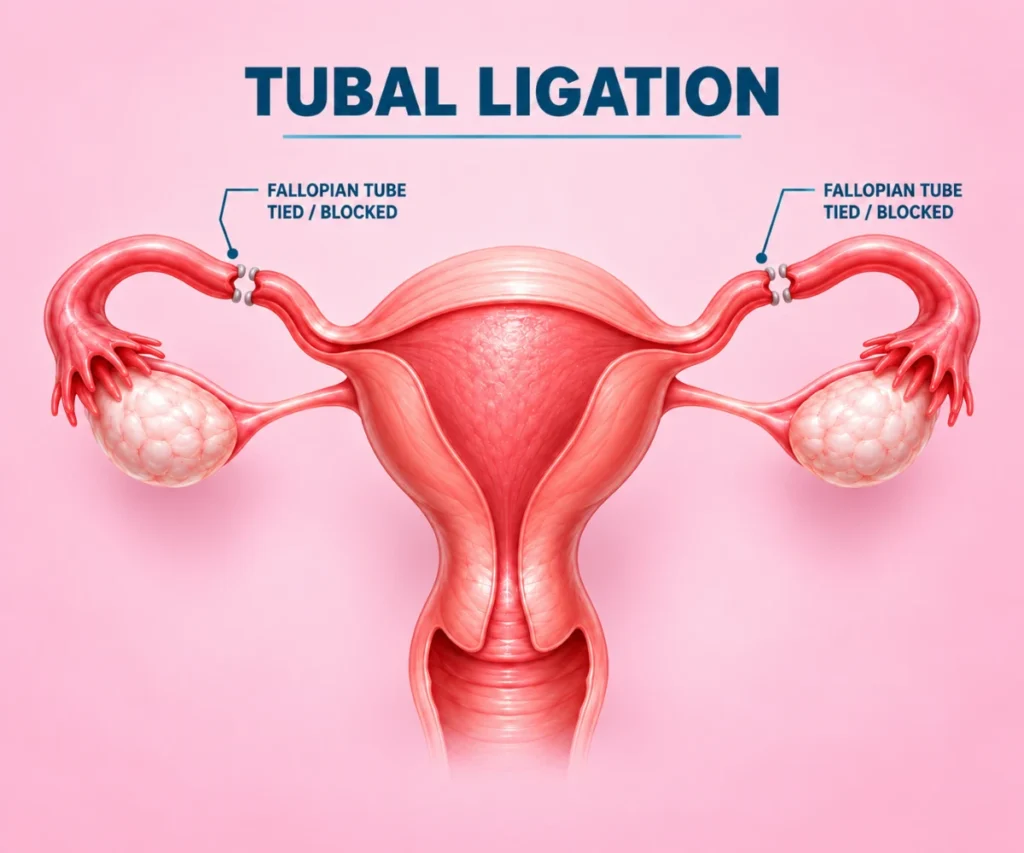
Tubal ligation is a surgical method of contraception intended to prevent future pregnancy. It works by interrupting the fallopian tubes so that sperm and egg cannot meet through the usual reproductive pathway.
Depending on the technique, the tubes may be sealed, clipped, blocked, divided or partly removed. The ovaries and uterus generally remain in place.
Tubal ligation is intended to be permanent, even though reversal may sometimes be considered after certain techniques. Reversal is not always possible and does not guarantee pregnancy.
According to the American College of Obstetricians and Gynecologists (ACOG), fewer than 1 in 100 women become pregnant within the first year following tubal sterilisation. The likelihood of failure can vary according to the method used and other factors.
For this reason, tubal ligation should not be presented as a method with zero possibility of pregnancy.
Why might Salpingectomy be Recommended Instead of Tubal Ligation?
Unlike tubal ligation, salpingectomy is not performed exclusively for contraception. It may be recommended when a fallopian tube needs to be removed for medical reasons.
Common examples include:
- Ectopic pregnancy: If a pregnancy develops within a fallopian tube and surgery is required, removal may be necessary when the tube is ruptured, bleeding or severely damaged. Other treatment options may be appropriate in selected cases.
- Hydrosalpinx: A blocked fallopian tube filled with fluid may require treatment, particularly when fertility treatment is being considered.
- Severe tubal damage: Previous pelvic infection, inflammation, endometriosis or surgery can sometimes leave a tube significantly damaged.
- Cancer-related considerations: Salpingectomy may form part of treatment for certain gynaecological conditions. In selected patients, removing the fallopian tubes during another appropriate pelvic operation may also be discussed as a way to reduce the risk of certain ovarian cancers.
- Permanent contraception: Complete removal of both tubes can prevent natural conception, but whether this is an appropriate or permissible option depends on the individual circumstances and applicable requirements.
The presence of one of these conditions does not automatically mean that salpingectomy is necessary. Treatment depends on the diagnosis, severity, available alternatives and the patient’s overall health.
Which Procedure is More Effective at Preventing Pregnancy?
Both procedures are intended to prevent pregnancy when used for permanent contraception, but their mechanisms are different.
Tubal ligation interrupts the fallopian tubes while leaving some tubal tissue in place. Pregnancy can occur rarely if the procedure fails or the tubes regain a pathway.
A complete bilateral salpingectomy removes both fallopian tubes. Natural conception is not expected afterward because the usual route through which sperm and egg meet is no longer present.
However, effectiveness is only one consideration when comparing these procedures. The need to treat a medical condition, surgical complexity, future reproductive plans and the relevant clinical circumstances are equally important.
It is also important to distinguish salpingectomy performed to treat a diseased tube from surgery being considered specifically for permanent contraception. The reason for the procedure affects the decision-making process.
Can Tubal Ligation or Salpingectomy Be Reversed?
Reversibility is one of the most important differences between the two procedures.
Tubal Ligation Reversal
Some tubal ligation procedures may be reversible through microsurgery. Whether reversal is an option depends on the original technique, how much healthy tube remains, age, ovarian reserve, sperm factors and other fertility considerations.
Even when reversal is technically possible, pregnancy cannot be guaranteed. A specialist may also discuss alternative reproductive options depending on the patient’s circumstances.
Salpingectomy Reversal
A completely removed fallopian tube cannot simply be reconnected. Following complete bilateral salpingectomy, natural conception is not expected.
However, in vitro fertilisation (IVF) may remain an option if the uterus and ovaries are suitable. IVF involves fertilising eggs in a laboratory and transferring an embryo into the uterus, bypassing the fallopian tubes.
Anyone considering a procedure with permanent consequences should discuss future fertility plans before proceeding.
Risks, Recovery and Hormonal Effects Compared
The risks and recovery experience depend on the surgical technique, the reason for the procedure and the patient’s medical history.
| Factor | Salpingectomy | Tubal Ligation |
|---|---|---|
| Surgical risks | May include bleeding, infection, anaesthetic complications and injury to nearby structures | May include bleeding, infection, anaesthetic complications and injury to nearby structures |
| Surgical approach | May be performed laparoscopically or through open surgery | May be performed laparoscopically or through another appropriate surgical approach |
| Recovery | Often shorter after uncomplicated laparoscopic surgery; open surgery usually takes longer | Often involves a shorter recovery when performed laparoscopically |
| Hormones | Ovarian hormone production usually continues if the ovaries remain | Ovarian hormone production usually continues |
| Periods | Menstruation usually continues if the uterus and ovaries remain | Menstruation usually continues if the uterus and ovaries remain |
| Cancer-risk considerations | May reduce the risk of certain ovarian cancers in selected circumstances, but does not eliminate the risk | Does not provide the same fallopian-tube-removal-related risk-reduction benefit |
Salpingectomy alone does not normally cause surgical menopause because the ovaries are not routinely removed. Tubal ligation also does not usually stop ovarian hormone production.
Recovery varies between individuals. Following uncomplicated laparoscopic salpingectomy, many patients gradually return to their usual daily activities within approximately two weeks, although open surgery may require several weeks of recovery. Recovery after tubal ligation also depends on the technique used and whether other procedures are performed at the same time.
Your surgeon should provide individual instructions regarding work, exercise, driving, lifting and sexual activity.
Neither procedure should be described as universally safer. The risks depend on the patient’s condition, previous operations, surgical approach and the reason for treatment.
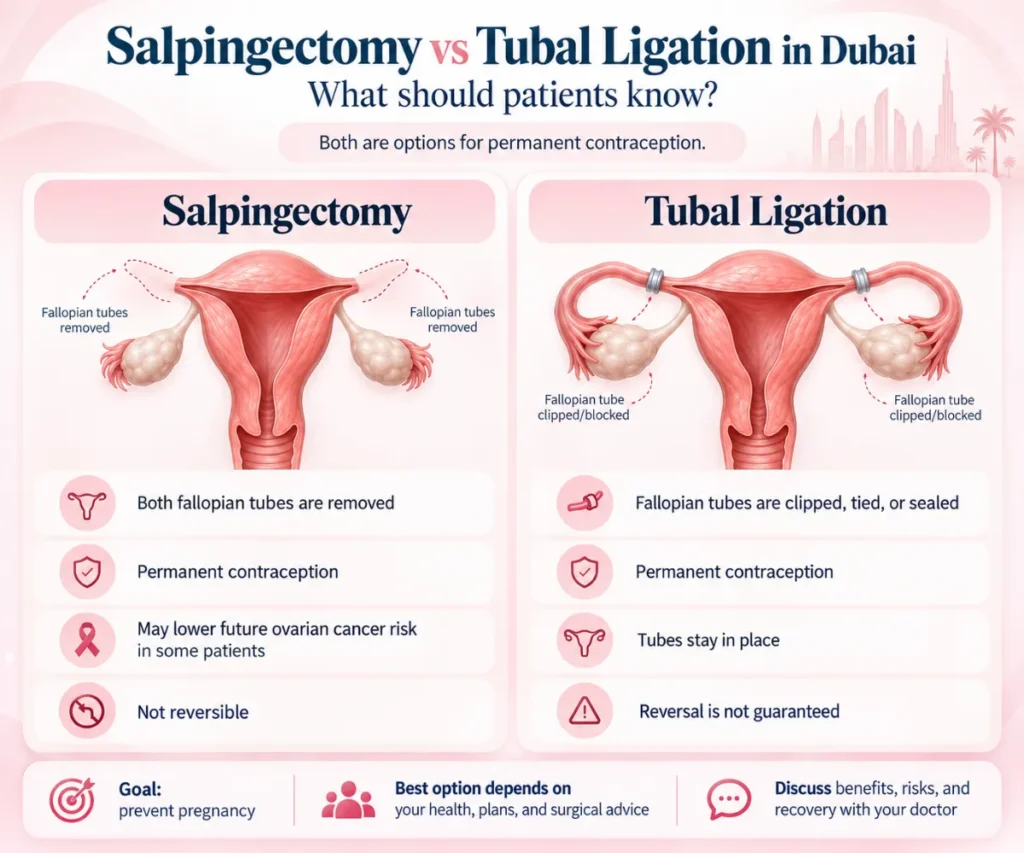
Salpingectomy vs Tubal Ligation in Dubai: What Should Patients Know?
Women considering salpingectomy vs tubal ligation in Dubai should understand that the medical indication matters, particularly when permanent contraception is being discussed.
Removing a fallopian tube to treat an ectopic pregnancy, severe tubal damage or another medical condition is different from performing surgery specifically to prevent future pregnancies.
UAE medical legislation contains provisions concerning reproductive interventions and female sterilisation. The application of these provisions depends on the clinical circumstances and the current regulatory framework.
For this reason, women considering permanent contraception should confirm the applicable requirements with their treating gynaecologist and licensed healthcare facility before making a decision. International medical guidance should not be assumed to override local requirements.
Patients should also receive a clear explanation of the proposed procedure, its purpose, alternatives, risks and implications for future fertility before providing informed consent.
How Does Dr. Neha Lalla Approach the Decision?
For Dr. Neha Lalla, Consultant Obstetrician & Gynaecologist in Dubai, the choice between salpingectomy and tubal ligation should be considered in the context of the patient’s individual medical and reproductive history.
Factors that may influence the discussion include:
- The reason for considering fallopian tube surgery
- Whether one or both tubes are affected
- Previous ectopic pregnancy or pelvic infection
- Previous Caesarean delivery or abdominal surgery
- The presence of tubal disease or endometriosis
- Current health and surgical considerations
- Future pregnancy plans and fertility goals
- Applicable requirements if permanent contraception is being considered
The aim is to establish which procedure, if any, is appropriate for the condition being treated and to make sure the patient understands its potential consequences.
A procedure should not be selected simply because it appears more permanent or more advanced. The recommendation should follow the clinical indication and an informed discussion between the patient and her treating team.
Frequently Asked Questions
1. Is salpingectomy the same as tubal ligation?
No. Salpingectomy removes one or both fallopian tubes, whereas tubal ligation blocks or interrupts the tubes to prevent pregnancy.
2. Which procedure is more permanent?
Complete bilateral salpingectomy is irreversible in the conventional sense because both tubes have been removed. Tubal ligation is also intended as permanent contraception, although reversal may be possible with selected techniques.
3. Can I become pregnant after tubal ligation?
Pregnancy is uncommon but can occur if sterilisation fails. If you have a positive pregnancy test after tubal ligation, seek prompt medical assessment because ectopic pregnancy must be considered.
4. Does either procedure cause menopause?
Neither procedure normally causes surgical menopause when the ovaries remain in place. The ovaries produce the main reproductive hormones, and menstruation usually continues if the uterus and ovaries remain.
5. Can I have IVF after bilateral salpingectomy?
IVF may remain possible after complete bilateral salpingectomy if the uterus and ovaries are suitable. A fertility specialist can assess your individual circumstances and discuss appropriate options.
6. Which procedure is right for me in Dubai?
The appropriate procedure depends on why surgery is being considered, your medical history, fertility plans and the applicable UAE requirements. A consultation with a qualified gynaecologist can help clarify the options.
Making an Informed Decision About Fallopian Tube Surgery
Salpingectomy and tubal ligation both involve the fallopian tubes, but they serve different purposes.
Salpingectomy removes one or both tubes and may be recommended to treat ectopic pregnancy, significant tubal disease or selected cancer-related concerns. Tubal ligation interrupts the tubes and is primarily intended as permanent contraception.
Their implications for future pregnancy and reversibility are also different. Complete bilateral salpingectomy prevents expected natural conception, while pregnancy after tubal ligation is uncommon but remains possible. Some tubal ligation techniques may be reversible, although success is not guaranteed.
For women in Dubai, the reason for surgery and the applicable medical requirements should be considered alongside surgical risks and future reproductive plans.
Dr. Neha Lalla, Consultant Obstetrician & Gynaecologist in Dubai, can discuss the relevant clinical factors and help patients understand what a proposed procedure involves. Before proceeding, patients should understand why surgery is recommended, what alternatives may be available, how recovery may differ and what the decision means for future pregnancy.
Medical disclaimer
This article is for general educational purposes and does not replace individual medical advice, diagnosis or treatment. The suitability, risks and fertility implications of either procedure depend on the patient’s clinical circumstances. Applicable UAE requirements should be confirmed with the treating physician and licensed healthcare facility.